
Residents Forgive a Lot. A Filthy Parking Garage and Stairwells Are Not on That List.
Apartment parking garages and stairwells shape residents' impressions of upkeep because they are part of the route home, often used more frequently than the lobby. Litter, tracked dirt, spills, and neglected corners can make that route unpleasant even when the apartment itself is well maintained. Consistent cleaning helps care for these shared spaces, while lighting, repairs, drainage, and security need their own attention.
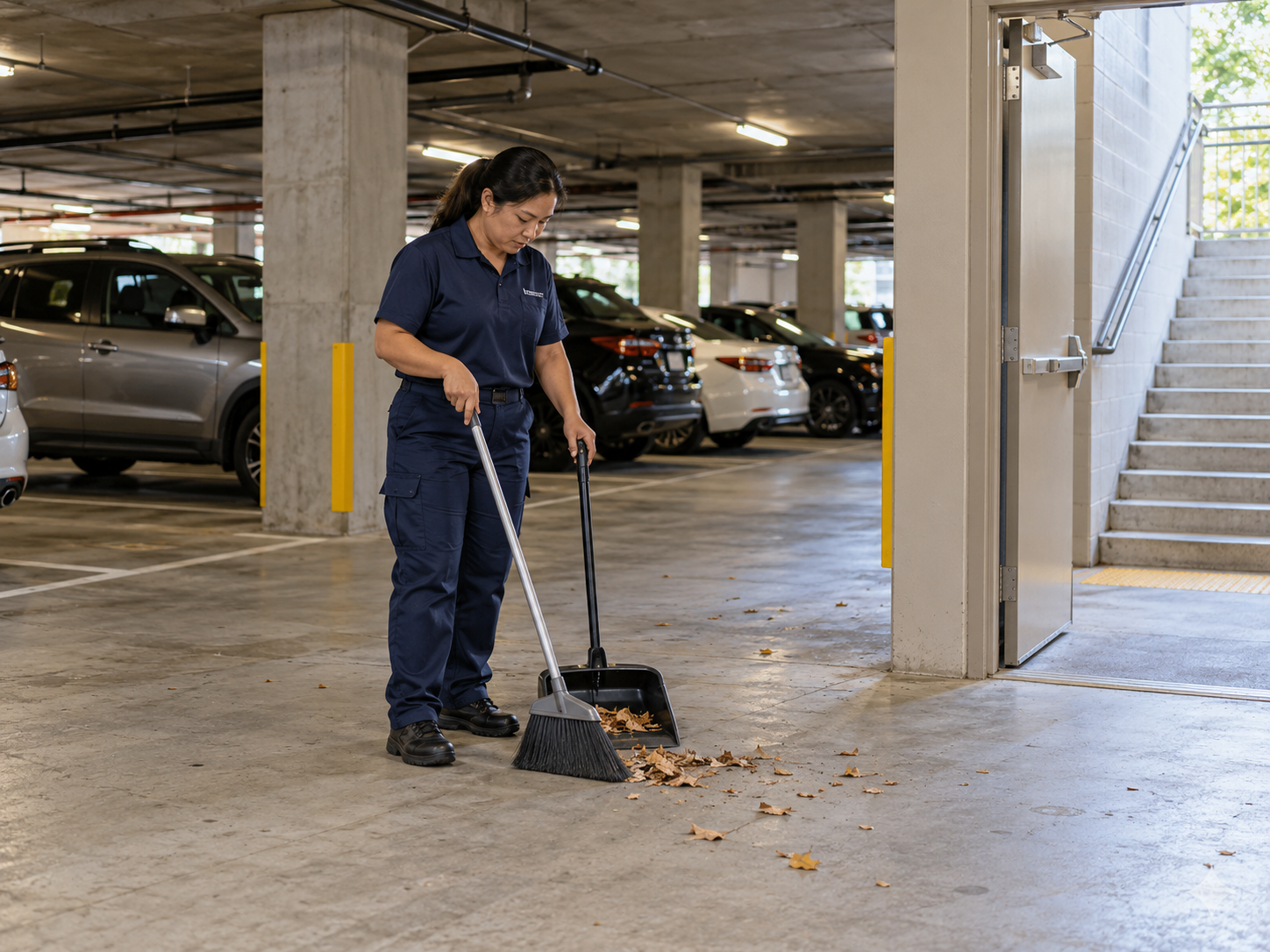
A resident can appreciate an attractive unit and still be frustrated by what happens between the parking space and the front door. These areas are not decorative extras. They connect parking, elevators, stairs, and living spaces, so their condition becomes part of ordinary life in the building.
The route home is larger than the lobby
A leasing tour usually follows a planned path. Residents follow a practical one. Someone carrying groceries may enter from the garage, pass through an elevator vestibule, and arrive at the apartment without using the main lobby at all.
That makes the everyday route a useful way to think about shared space cleaning. A polished entrance does not compensate for a neglected landing that residents cross each evening. Dirt can also travel along the route, moving from a parking area through a doorway into a corridor.
A property review should therefore consider connected spaces rather than evaluating each room in isolation. The concern is not that one overlooked corner proves the entire property is poorly managed. It is that a frequently used route can remain outside the attention given to the spaces designed for visitors.
Stairwells combine several kinds of surfaces
A stairwell includes much more than steps. Landings, railings, door handles, thresholds, and wall edges all contribute to how the space feels and functions. Some receive frequent contact, while others collect settled dirt or debris between visits.
The materials can vary within the same stairwell. Painted surfaces, concrete, metal rails, and different floor finishes do not necessarily tolerate the same treatment. A building's cleaning arrangement should recognize those differences instead of describing the entire area with one vague instruction.
Access is another consideration. Residents continue using the property while work is underway, and doors connecting shared spaces have purposes beyond housekeeping. Cleaning plans need to fit the building's access arrangements rather than treating a stairwell as an empty room that can be taken out of use casually.
A stain and an active problem are different conditions
Parking garages accumulate marks from vehicles and ordinary use. Some are surface soil, while others may involve worn coatings, longstanding staining, moisture, or a problem that needs maintenance. An old mark should not automatically be described as removable dirt.
The distinction matters for expectations. A cleaning service may improve a surface without restoring it to the appearance of newly installed material. Promising that every dark patch will disappear can set up the property team and residents for disappointment before the work begins.
An active spill or recurring leak is different from a remaining cosmetic mark. Identifying that difference helps management arrange the appropriate response. Repeatedly requesting more cleaning will not repair a vehicle leak, a damaged surface, or a drainage issue.
Odors deserve attention beyond appearances
A stairwell or garage entrance can look reasonably orderly and still have an odor that residents notice. Waste or a previous spill may contribute, but those are not the only possibilities. Moisture, drainage, ventilation, and building conditions can also be involved.
That is why recurring odors should not be reduced to a request for a stronger fragrance. The property team needs to understand whether the concern belongs to routine cleaning, maintenance, or a specialist. A service visit should not be represented as a guaranteed solution to a condition that has not been identified.
Residents benefit when the distinction is communicated clearly. Knowing that a concern has been recognized and assigned to the appropriate person is more useful than seeing the same area receive repeated attention without improvement.
Cleanliness and security are separate responsibilities
A neglected garage may affect how residents perceive the property, especially at night. That does not mean a cleaned garage becomes secure or that cleaning corrects poor lighting, a broken access gate, or a malfunctioning door.
Those responsibilities can support one another without being combined into one promise. Cleaning addresses the condition of surfaces and ordinary debris within its scope. Property management, maintenance teams, and security providers address their respective areas of work.
Keeping these distinctions clear makes the discussion more credible. It avoids using residents' safety concerns as a sales claim and helps the property respond to the actual condition rather than its appearance alone.
Resident feedback gives these spaces a place in the conversation
A resident may mention a stairwell odor during a maintenance call or describe garage litter in a message about something else. Those observations can be useful even when they do not arrive as a formal cleaning complaint. Repeated comments about the same location deserve attention to the pattern, not just the latest incident.
An apartment industry complaint roundup published by Multi Housing News in 2018 included poor grounds and common area upkeep near the top of its list. That is historical industry context, not current evidence about Los Angeles County residents or proof that garage cleaning determines lease renewals.
The practical point does not require overstating the research. Shared areas are part of the home residents are paying to use. Their condition deserves a place in property discussions alongside the unit interiors and amenities that usually receive more attention.
An arrangement built around the actual property
Garages and stairwells differ in traffic, materials, layout, and access. The useful cleaning conversation starts with those conditions, including which connected areas are included and which concerns need a separate service or repair.
Paradigm Janitorial can discuss shared area cleaning for apartment properties in Los Angeles County and San Bernardino County. The aim is to support a property that feels cared for along the routes residents use every day, with clear expectations about what cleaning can address.
Resources
Multi Housing News, The Top Resident Complaints and How to Respond to Them
A sponsored industry article published April 18, 2018. It provides historical context about common area upkeep, not a current local resident survey or proof of a link between cleaning and renewals.
CDC, When and How to Clean and Disinfect a Facility
General background on caring for shared surfaces in community facilities. It does not address garage repairs, structural conditions, or security.