
Apartment Move Out Cleaning in LA and San Bernardino County, What Landlords Check
Landlords commonly review kitchens, bathrooms, flooring and other accessible areas after an apartment is vacated, but the exact inspection varies by property. In California, a cleaning deduction must be tied to restoring the unit’s cleanliness at the start of the tenancy, rather than charging for ordinary wear. Professional move out cleaning can address removable soil, but it does not guarantee a deposit refund or replace an inspection.
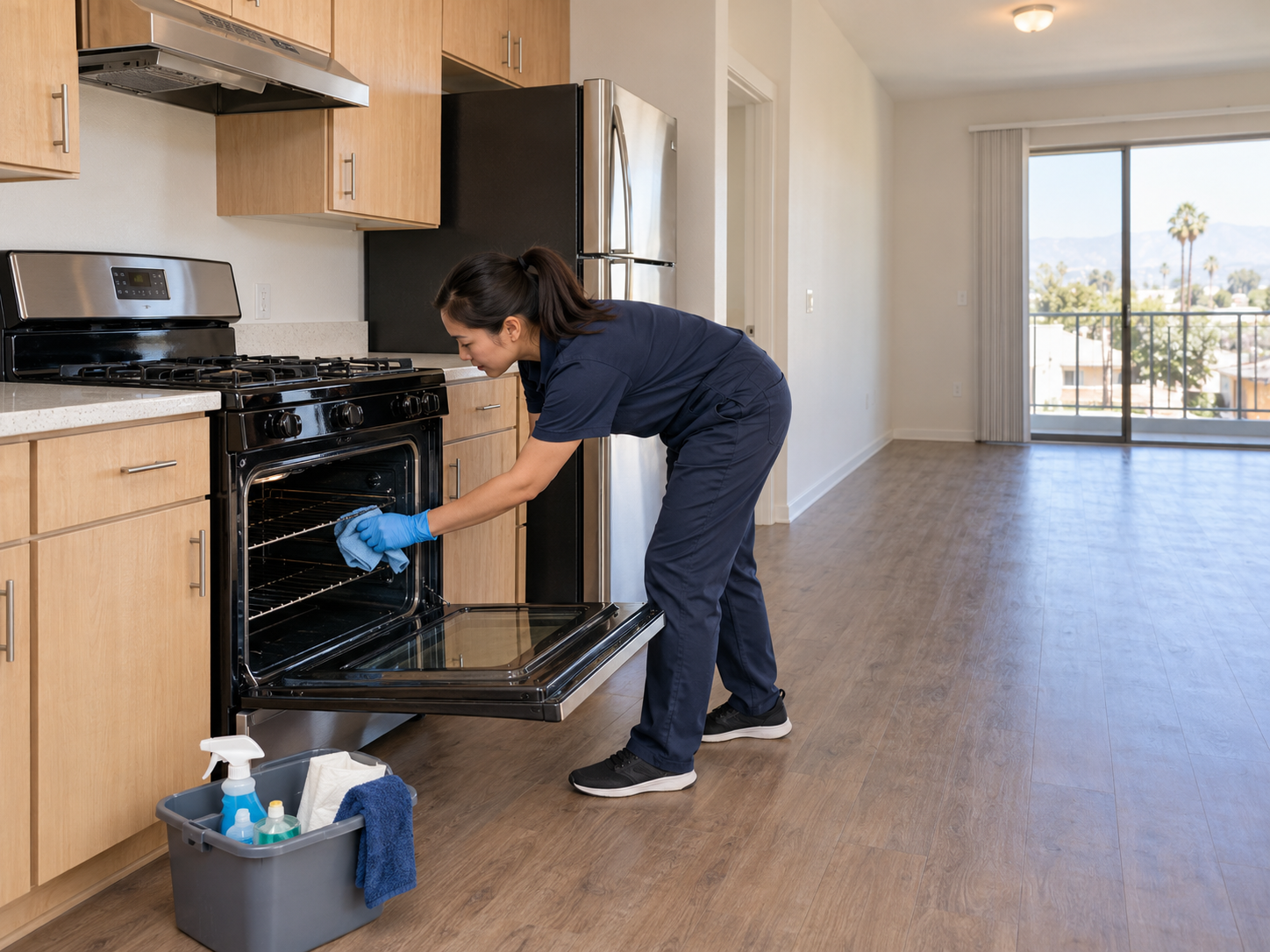
The areas that deserve attention at move out
Ovens and stovetops can hold baked on residue that was easy to overlook during everyday use. Refrigerators may have marks on shelves, drawers or seals that become more visible once food is removed. Bathrooms can show soap residue around tubs, showers and fixtures.
Floors, baseboards and window tracks may also look different once the room is empty. Furniture can hide an area for months, so the condition after a move may reveal concerns that were not obvious while the apartment was occupied. These are useful places to review, rather than a proven ranking of where deposits are lost.
Belongings left in closets, cupboards or outdoor spaces should be raised with the property manager. Cleaning and removal of left items are not automatically the same service. Do not assume that a cleaner has authority to dispose of something simply because the apartment is being prepared for another tenant.
The cleaning line and the damage line
Cleaning restores cleanliness. It does not undo every change in a material, and no provider should promise otherwise. A mark that wipes away and a permanent alteration in a carpet or floor finish are different concerns. The cause and condition need to be assessed before treating them as the same job.
For deposit purposes, ordinary wear and preexisting conditions must be distinguished from chargeable damage or additional cleaning. A stain or scuff should not be classified from a brief description alone. The beginning condition, tenancy and available records all matter.
A cleaner can describe the agreed work and visible conditions, but the landlord decides any deduction under the applicable rules. A cleaning receipt is not itself proof that the whole amount may be charged to a tenant. This distinction helps keep the service discussion separate from a legal disagreement.
California deposit information relevant to cleaning
California Courts explains that cleaning charges are limited to making the unit as clean as when the tenant first moved in. A landlord generally has 21 days after move out to return the deposit or provide an itemized statement and return any remaining amount. Documentation rules and exceptions may apply.
The California Department of Real Estate describes photographic requirements before and after work charged against a deposit, effective April 1, 2025, and move in photographs for tenancies beginning on or after July 1, 2025. These are documentation requirements, not a promise that photographs end every dispute.
Use the official guidance linked below for the current details of a particular situation. Professional cleaning is a service decision, while a disagreement over a deposit may need advice from a qualified legal professional. This article provides general information about cleaning and does not determine anyone’s legal rights.
An empty apartment changes what can be seen
During a move, attention is often on packing, transport and returning access items. Once the belongings are gone, the kitchen and bathroom may show residue that was previously out of sight. That does not mean every tenant leaves a unit dirty or that every apartment needs the same cleaning scope.
For a property manager, the useful starting point is the condition of this particular unit and the work required before the next person arrives. Removable soil, maintenance concerns and damaged materials should be identified separately. A cleaning appointment should not be used as a substitute for a repair that has not been completed.
Clear access arrangements also matter. Let the provider know when the apartment is vacant, whether contractors are still working and which areas are included. Those details help define the assignment without publishing the company’s internal work sequence or operating procedures.
Professional cleaning should have a defined scope
The service may cover agreed appliance surfaces, bathroom areas, accessible cupboards, floors and other parts of the apartment. Confirm the scope with the provider, including any restrictions on delicate finishes and work that is not included. Carpet treatment, exterior areas and disposal requests should be discussed rather than assumed.
After the work, the property manager or tenant can review the completed assignment against that agreement. An unresolved mark may need further assessment, particularly if it is a change in the surface rather than remaining soil. A provider should explain those limits without promising that every mark can be removed.
Preparing for the next stage
Paradigm Janitorial provides apartment property cleaning across Los Angeles County and San Bernardino County. A cleaning assessment can help identify the removable buildup and agreed areas that need attention before the unit’s next use.
For tenants, the focus is a clear cleaning scope and an accurate record of the apartment’s condition. For property managers, it is a unit whose cleaning, maintenance and documentation have each been handled by the appropriate person. Keeping those responsibilities distinct makes the service easier to review without turning a blog into advice on maximizing deductions.
Resources
- California Courts, security deposit guide, Official information on permitted cleaning deductions and deposit returns.
- California Department of Real Estate, moving out, Official information on inspections, documentation and photographs.