When Apartment Trash Areas Affect Resident Satisfaction
A neglected apartment trash area can affect residents through odors, scattered waste, pest attraction and an unpleasant daily trip to the bins. Professional enclosure cleaning can address surrounding debris and surface residue, while overflowing containers or an established infestation may also require the waste collector or a pest management specialist.
The area residents experience between property tours
An apartment building has spaces that appear in listing photographs and spaces residents use simply because they have to. The trash enclosure belongs to the second group. It may receive little attention during a tour, but residents encounter it while leaving for work, returning home or carrying waste out after dinner.
That repeated contact makes its condition part of the everyday experience of living at the property. A person does not need to inspect the building carefully to notice a leaking bag beside the bin or loose rubbish across the approach. The impression forms during an ordinary task that should be straightforward.
The condition of one enclosure does not determine every resident's renewal decision. Housing choices involve many factors. Nevertheless, recurring maintenance problems can become part of the concerns residents raise, particularly when the same visible issue remains unresolved over several visits.
The problem can extend beyond the containers
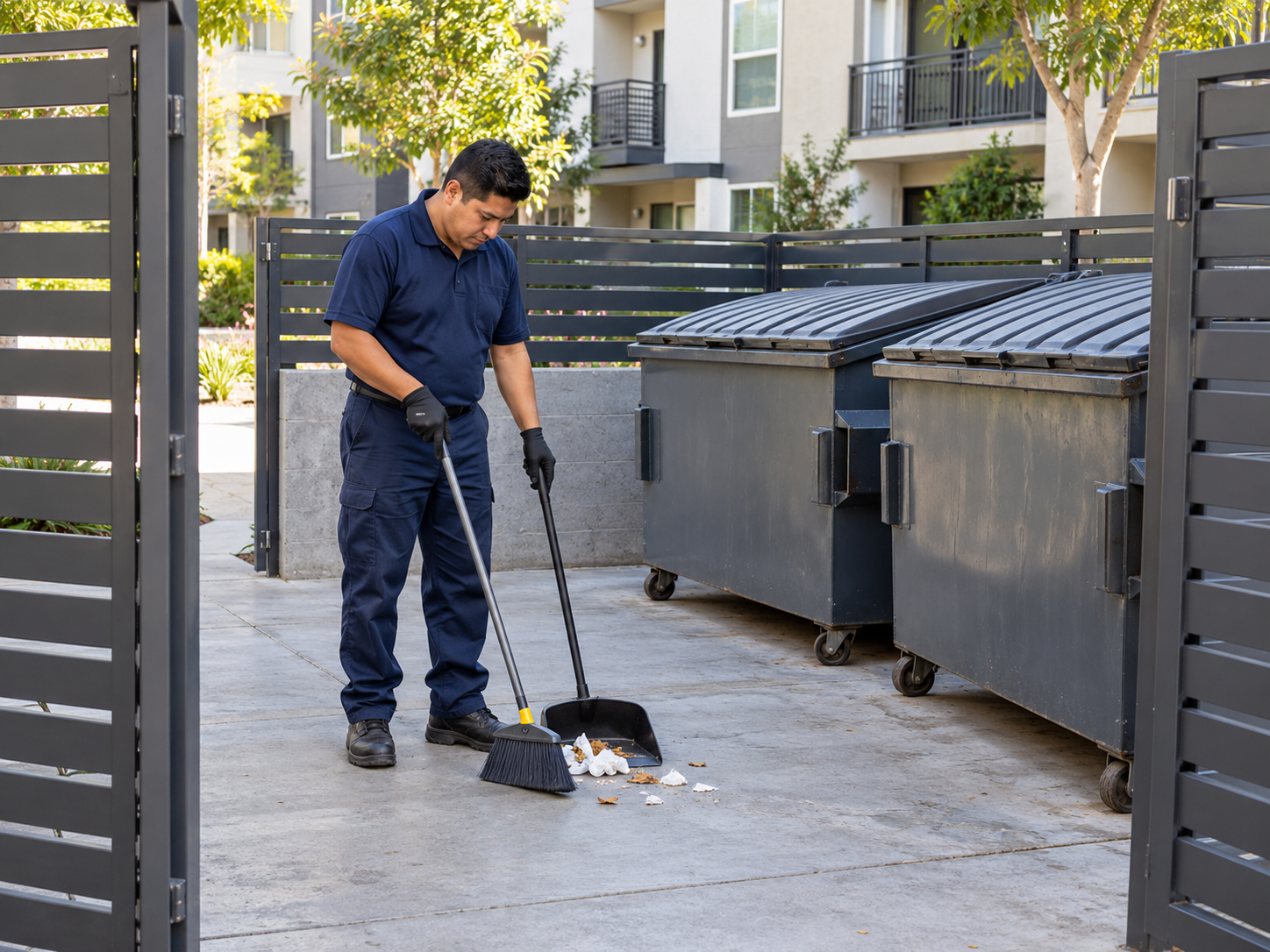
An enclosure is more than the dumpster itself. It includes the ground around the bins, the approach residents use, gates and nearby surfaces. Emptying a container can remove the accumulated waste inside without addressing a torn bag, spilled liquid or loose material outside it.
Warm weather can make odors around waste areas more noticeable. Wind can move light rubbish into parking areas or landscaping, while leakage can leave residue on surrounding pavement. The affected area may become larger than the place where the waste was first left.
A complaint about flies, an unpleasant approach or a stained walkway may therefore point to the same general location. The useful response is to understand which part of the waste area is causing the concern, rather than assume that another collection will resolve every condition around it.
Collection and enclosure cleaning solve different problems
Waste collection handles the contents of the containers according to the arrangement with the hauler. Cleaning the enclosure concerns the surfaces and debris around those containers. A property can have reliable collection and still experience an untidy approach if surrounding litter or residue is outside the collection service's scope.
The opposite can also happen. An enclosure may be cleaned while the containers remain too full for residents to use properly. Cleaning cannot create capacity inside an overflowing dumpster or correct a missed collection. Those conditions need to be addressed with the party responsible for the containers and waste service.
This distinction matters when evaluating repeated complaints. The property manager needs to know whether the issue concerns collection, container condition, surrounding cleanliness or a combination of them. Treating all four as the same job can leave the underlying problem in place even after someone has attended the area.
Food residue can contribute to pest attraction
The Environmental Protection Agency identifies access to food, water and shelter as important factors in pest problems. Its housing management resources discuss food residue in waste and recycling containers, along with the importance of sanitation and maintenance. A waste area can provide resources that support pest activity when food waste or leakage remains accessible.
That does not mean every untidy enclosure has an infestation or that cleaning alone will eliminate an established problem. Evidence of rodents, cockroaches or other persistent pests should be evaluated by an appropriate pest management professional. The building may also need repairs or changes beyond the cleaning provider's role.
Keeping the area cared for supports that broader work by addressing ordinary debris and residue within the cleaning scope. It should complement waste management and professional pest attention rather than be advertised as a replacement for either.
Small recurring conditions affect confidence in upkeep
Residents often notice repetition more than a single incident. A bag left beside a bin on one busy evening may be an isolated issue. The same scattered waste or unpleasant surface conditions over several weeks can suggest that a routine responsibility is being missed.
Some people will report the problem directly. Others may mention it in a review, discuss it with neighbors or bring it up only when management asks about their experience. Complaint volume is useful information, but it does not capture every resident's view of the property.
Basic shared facilities contribute to whether residents feel the property is being maintained. An orderly front entrance and a neglected waste area can create inconsistent impressions of the same building.
The condition of the enclosure can reveal a responsibility gap
Waste areas are used by residents, serviced by collectors and encountered by maintenance and cleaning staff. Several parties may be involved without sharing the same responsibility for every part of the area. A task can be missed when each person believes it falls outside their work.
A cleaning agreement should identify whether the enclosure is included and what that inclusion means. Maintaining the surrounding ground is different from moving a dumpster, handling a damaged container or removing unusually hazardous waste. Access limitations and the physical condition of the area can also affect what a provider can reasonably address.
Clear responsibility is especially useful when a problem returns soon after a visit. The question is not simply whether someone cleaned the area. It is whether the condition has a cause outside that service, such as continuing leakage, collection difficulties or damaged equipment. Understanding that distinction allows the property to address the right issue.
A cared for trash area belongs in the overall resident experience
Residents should be able to complete a routine trip to the bins without navigating avoidable debris or repeatedly encountering an area that appears unattended. The enclosure does not need to become a showcase feature. It needs to function as a maintained shared facility.
For apartment properties in Los Angeles County and San Bernardino County, professional common area cleaning can include waste enclosure care when that work is part of the agreed scope. It fits alongside attention to entrances, circulation areas and other spaces residents use regularly.
The benefit is a more consistent property experience. Collection handles the waste, cleaning addresses agreed surrounding conditions and specialist services address problems outside ordinary cleaning. When those responsibilities are clear, the enclosure is less likely to remain the overlooked part of an otherwise cared for property.