
Your Auto Repair Waiting Room Tells Customers How You Will Treat Their Car
An unexpected car repair can throw off an entire day. A warning light appears on the way to work, a strange noise starts on the freeway, or the brakes begin to feel different. By the time a driver arrives at a repair shop, they may already be worried about cost, time, and whether they chose the right business.
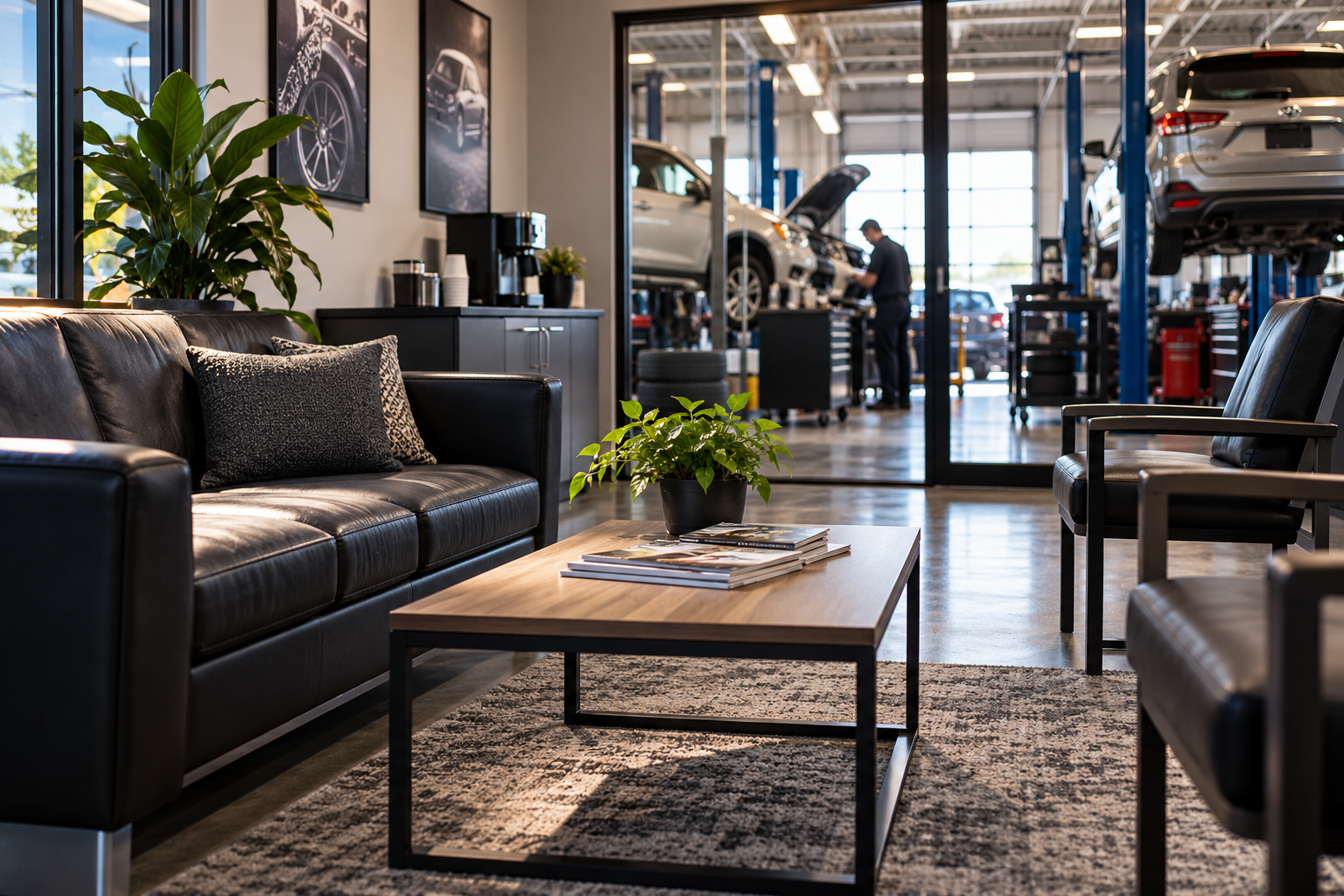
Then they walk into the waiting room. The counter has greasy fingerprints. There is grit along the floor. A chair has a stain that makes the customer choose another seat. None of these things proves that a mechanic is careless, but each gives a worried customer something else to question.
Customers cannot usually evaluate the repair work themselves. They may not know whether a component was installed correctly or whether the diagnosis was accurate. They can, however, evaluate the room where they are asked to wait. That makes the customer area an important part of the service experience.
What Customers See That Employees Stop Noticing
A waiting room becomes untidy gradually. One scuff becomes several. Dust accumulates behind a display. Coffee spills leave faint marks on a table. A door handle collects residue from hands moving between the shop and the front desk. Employees see these surfaces every day, so changes may become easy to overlook.
A first time visitor sees everything at once. During a long wait, small details become especially noticeable. Someone waiting for a diagnostic result may study the windows, chairs, floor edges, and restroom. A parent waiting with a child may notice whether the seating is comfortable and clean. A delivery driver who depends on the vehicle for income may already be anxious enough without an unpleasant place to sit.
The room should not add to that stress. Clean seating, stocked restrooms, and tidy counters communicate that the business has considered the people spending time there.
Grease Belongs in the Service Bay
Auto repair is messy work, and customers understand that. Nobody expects a busy service bay to resemble a hotel lobby. The issue is whether the dirt from that work follows customers into the areas intended for them.
A greasy tool is normal. A greasy customer door handle is preventable. Road grit near the shop entrance may be unavoidable at first, but it should not remain there indefinitely. A waiting room floor needs cleaning suited to its material and the soil tracked in from outside and the work area.
Useful daily tasks can include cleaning the front counter, entrance glass, door handles, chair arms, tables, and floors. Waste containers need emptying. Restrooms need cleaning and supply checks throughout the day when traffic is heavy. Periodic work may include upholstery care, carpet cleaning, baseboards, and detailed dust removal.
Cleaning methods matter too. The wrong product can damage a finished surface, leave residue, or create a slipping hazard. Materials and manufacturer instructions should guide product selection.
The Restroom Can Change the Whole Impression
Customers often remember a restroom that was unpleasant to use. Empty soap dispensers, overflowing trash, odors, and neglected fixtures can undermine the comfort created by an otherwise pleasant waiting room.
A restroom may look good when the shop opens and need attention again by afternoon. That is why the right schedule reflects actual customer traffic, rather than assuming one cleaning each day will always be enough. Checking supplies, removing waste, cleaning touch points, and addressing recurring issues all help keep the space usable.
Employees benefit from those standards as well. The front desk team should not have to abandon customers repeatedly to handle a restroom problem that could be addressed through a predictable maintenance routine.
Cleaning Should Follow the Rhythm of the Business
A small appointment based specialty shop and a high volume general repair center have different needs. One may require a detailed daily cleaning and occasional daytime checks. Another may need more frequent attention around drop off, pickup, and long customer waits.
A practical cleaning plan begins by identifying the busiest surfaces and spaces. Which entrance brings in the most grit? Where do customers wait longest? Which counters are touched repeatedly? Which restrooms receive the heaviest traffic? Where do stains and dust return most quickly?
The answers help determine what needs attention daily and what belongs on a periodic deep cleaning schedule. They also help a business distinguish between dirt that can be removed and worn furnishings that need repair or replacement.
A Clean Room Supports Good Service
Cleanliness cannot guarantee an accurate diagnosis, an honest estimate, or an on time repair. Those depend on the shop's technical work and communication. A well maintained customer area simply removes one unnecessary reason for doubt.
Across Los Angeles County and San Bernardino County, repair shops compete for customers who want both dependable work and a professional experience. Paradigm Janitorial supports commercial spaces with ongoing cleaning needs so staff can concentrate on the work customers came to have done. The waiting room should make customers more comfortable while they wait, not give them another problem to think about.
Sources
https://autoleap.com/blog/make-your-auto-repair-shop-waiting-room-stand-out/
https://www.widewail.com/blog/essential-questions-for-automotive-customer-surveys