
The Quiet Importance of a Funeral Home Visitation Room
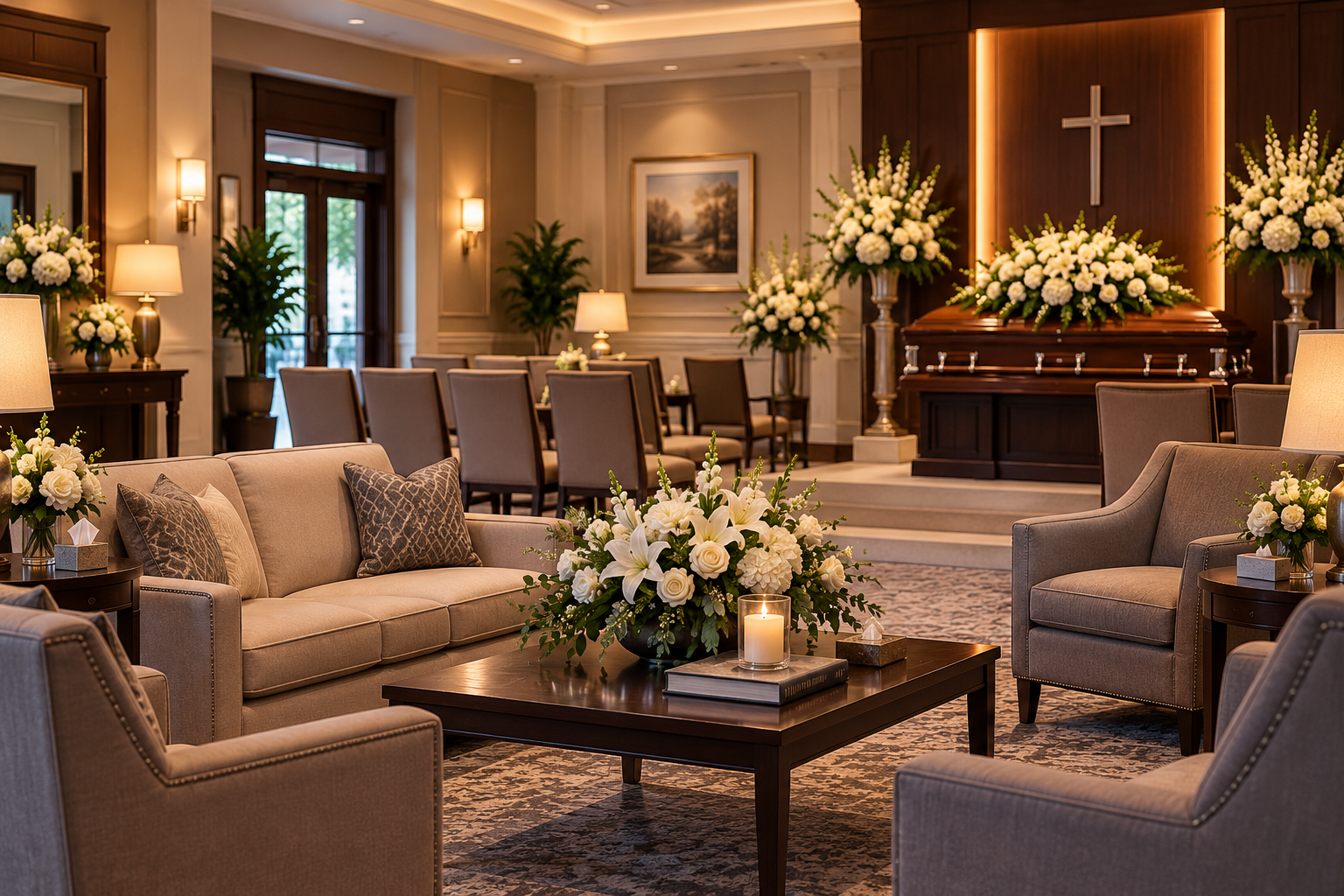
There is no repeat visit in a funeral home. A family walks into a visitation room on one of the hardest days of their lives, stays for a few hours surrounded by people they love, and carries the memory of that room with them for the rest of their lives. They will remember the flowers, the photographs, and the faces. They will also remember, with a clarity that surprises them years later, whether the room felt peaceful and cared for, or whether something about it felt off at the very moment they needed it to feel steady. Funeral directors in Los Angeles County and San Bernardino County understand that their real work is not logistics. It is holding a room together emotionally for people who are barely holding together themselves. The visitation room is where that work happens. Families receive a long line of guests there. Older relatives sit there for hours. Children experience their first funeral there. When that room looks or smells neglected, it does not register as a housekeeping issue. It registers as a failure of care, at the one moment care was the entire reason the family chose you.
Grief Makes People Notice Everything
A funeral visit can make the surrounding environment feel especially significant. A widow sitting beside a casket for three hours has very little to do with her eyes. She notices the dust on the window ledges, the watermark on the side table, the carpet that looks worn down the center aisle, and the chair upholstery that has seen many services before this one. A son who steps into the restroom to compose himself notices its condition more sharply than he would notice any restroom on any other day. Everything is amplified, because the day itself is amplified, and because the family has entrusted the most tender event of their year to this building. Nomis Publications, in guidance drawn from visits to hundreds of funeral homes and cemeteries across North America, puts the stakes plainly. It describes first impressions of a funeral business as the kind that can establish a lifetime of referrals and praise, or slowly destroy a reputation. The same guidance singles out the failures its author witnessed again and again. Dirty or stained carpet and flooring throughout the establishment. Dust so built up that a visitor could drag a finger through it on baseboards, window ledges, and the tops of furniture. Restrooms described as the top cleaning priority of all, because a dirty one becomes a public embarrassment for the home. And odor, which the writer notes attacks the senses and stays with visitors for the entire visit. None of those observations come from grieving families being picky. They come from the simple fact that a funeral home asks people to sit still, for a long time, in a heightened emotional state, inside rooms that either support their grief or quietly add to their distress.
Calm Is a Physical Thing Before It Is an Emotional One
Families often describe a good visitation afterward by saying the room felt peaceful. That peace is not only music and lighting. It is also the absence of anything that jars. A spotless, orderly room lets a family stop scanning their surroundings and turn toward each other. A room with stained flooring, dusty surfaces, streaked glass, or a stale smell keeps pulling attention back to the building, and every pull is a small interruption in a goodbye that cannot be repeated. The restroom carries a particular weight here. During a visitation, it becomes a refuge. It is where a daughter goes to cry privately, where an elderly spouse steadies himself, where a parent takes a child who is overwhelmed. If that refuge is dirty, poorly stocked, or worn, the family experiences it as the part of the funeral home that was not prepared for them, the room nobody expected them to judge and therefore the room that tells the truth. Guidance for families choosing a funeral home reflects this from the other side. Articles advising families on what to look for urge them to visit in person and judge the home by whether the environment is clean and orderly, treating that condition as a sign of whether the business is professional and reputable at all. Reception and visitation spaces also turn over in a way few other businesses experience. One family leaves in the evening and another arrives the next morning, with different flowers, different photographs, and the same chairs, doors, and restrooms. Progan, in its overview of funeral home cleaning, describes chapels and visitation rooms as the primary gathering spaces for mourners, with reception areas, door handles, seating, and restrooms all carrying heavy use from guests who may stay for extended periods. The pace that makes a funeral home compassionate, never rushing a family out, is the same pace that gives wear and odor time to settle in if the rooms are only tended in the margins of the day.
The People Who Choose You Next Time Are Sitting in That Room
Every visitation is also, without anyone intending it, an introduction to the next family who will need you. The guests in the visitation room today are neighbors, coworkers, church members, and adult children who will one day make arrangements for their own parents, or for themselves. They form their opinion of your home while they are there as mourners, not shoppers. They remember whether the room felt dignified. They remember whether the restroom embarrassed them. They remember whether the building felt like a place that treats people gently. That is how funeral home reputations actually travel across a community in the San Gabriel Valley, the Inland Empire, or anywhere else in this region. Not through advertising, and rarely through reviews written in the raw weeks after a loss. They travel through quiet sentences spoken months later. The room was beautiful and they took such care of us. Or, just as quietly, it was not quite what we expected. A single lapse that would be forgettable in a store or an office becomes permanent here, because it is attached to a permanent memory. The family cannot separate the condition of the room from the farewell itself, and they should not have to try.
Your Staff Feels the Room Before the Guests Do
Directors and assistants spend their working lives preparing families, arrangements, and services, and the rooms drift in the background of that work exactly as they do in any busy business. Wear arrives gradually. A carpet path darkens a shade at a time. Dust builds in the high and quiet places first, the ledges, the tops of tall furniture, the corners nobody stands in. Because the team sees the room every day, the change stays invisible to them while remaining obvious to a family seeing it once, on the worst day, with heightened eyes. There is also a harder truth. Staff who are setting rooms between services, greeting families, and managing the phones are being asked to protect the emotional tone of a building in the leftover minutes of an already full day. When those minutes run out, the visitation room is what absorbs the shortage, and it absorbs it silently, until a family absorbs it instead. When a funeral home reaches the point where its visitation rooms, chapel, and restrooms need more consistent care than a devoted staff can fit between services, many directors look to Paradigm Janitorial for commercial spaces where the standard is not just clean, but calm. Your team should be free to stand with families in the hardest hours of their lives. The room they are standing in should never be the thing a family remembers for the wrong reason.
Sources and references
https://www.nomispublications.com/blogdetail.aspx?id=353
https://progancleaning.com/funeral-home-cleaning-ensuring-a-serene-and-respectful-environment/