How Often Should a Commercial Office Be Professionally Cleaned?
Cleaning frequency depends on how an office is used
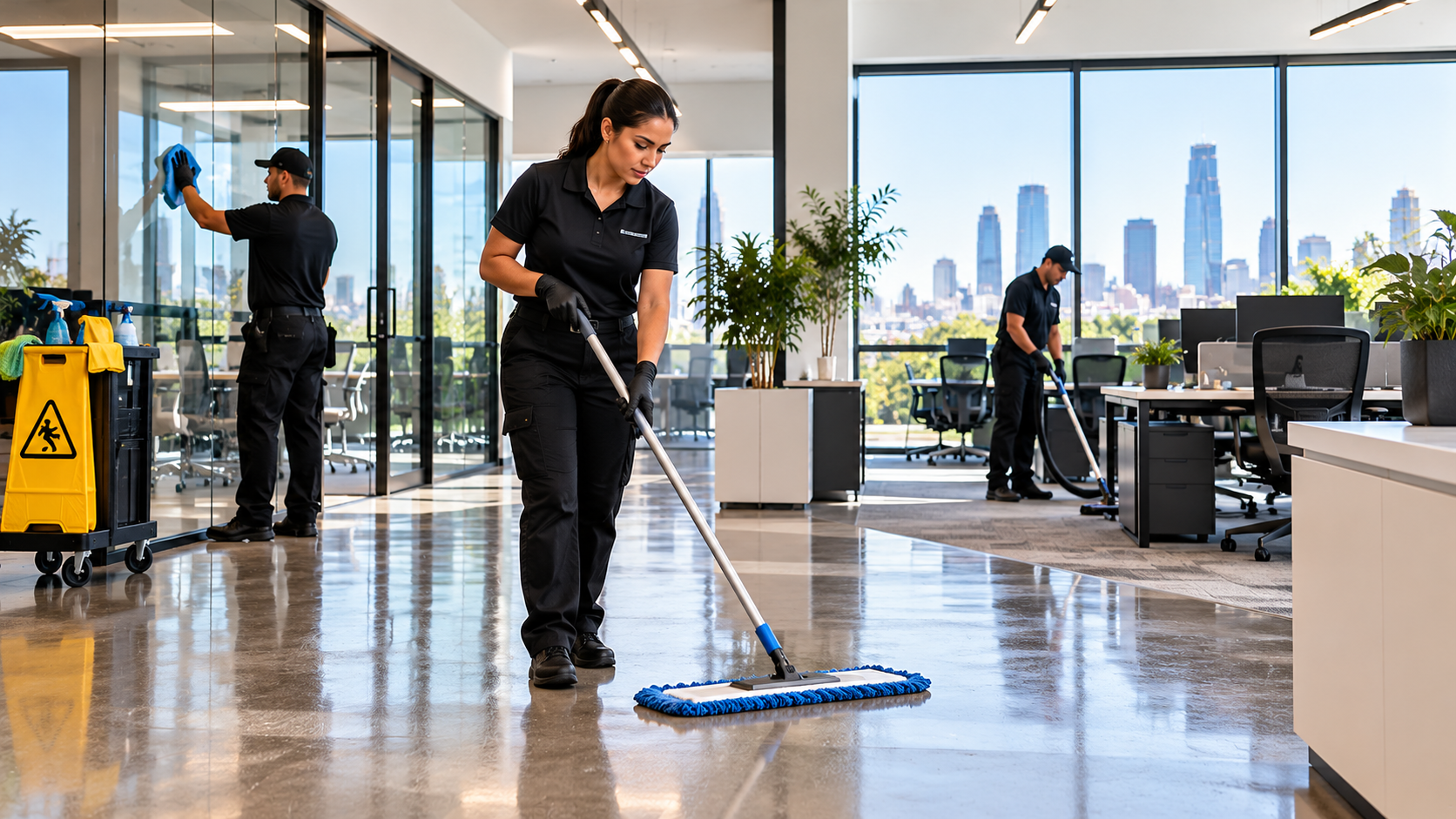
A quiet professional office with a small hybrid team has different needs from a busy workplace that receives visitors all day. Even inside one building, the reception area, kitchen, restrooms, meeting rooms, and private offices may require different schedules. Cleaning every room the same way can waste effort while overlooking the areas that need the most attention.
A practical schedule considers occupancy, visitor traffic, floor materials, shared facilities, business hours, and seasonal changes. The goal is not to select the most frequent service automatically. It is to maintain a reliable standard for the way people actually use the space.
Spaces that often need daily attention
Entrances, reception counters, restrooms, shared kitchens, waste stations, and frequently handled surfaces show the effects of a busy day quickly. A high traffic office may benefit from daily professional service, with additional checks during working hours for supplies, spills, and restroom conditions.
Daily attention does not mean deep cleaning every surface every evening. It means addressing the spaces where dirt and use accumulate fastest. A lobby floor may need regular care because outdoor debris arrives with every visitor. A meeting room that was unused that day may need less attention.
Floor maintenance should account for the actual material. Vacuuming carpet, maintaining entrance mats, and caring for finished hard surfaces require different methods. The wrong approach can shorten the life of flooring even when the room looks temporarily clean.
When several visits per week can be appropriate
A smaller office with predictable attendance may remain in good condition with professional cleaning several times per week and ordinary housekeeping between visits. That depends on clear responsibilities for spills, trash, and shared areas between scheduled cleanings.
Cleaning frequency should change as the workplace changes. A suite used by six employees may have very different needs after hiring, adding visitors, or expanding shared kitchen use. An office manager can assess conditions at different times of day to see whether the current schedule is keeping up.
An overflowing waste bin, frequently empty soap dispenser, or visibly dirty entrance is useful evidence that a schedule needs adjustment. The plan should respond to real conditions rather than remain unchanged simply because it was written into an old contract.
Periodic maintenance cannot be forgotten
Routine waste removal and restroom cleaning are only part of a commercial cleaning plan. Detailed edge cleaning, high dusting, interior glass, upholstery care, carpet extraction, and certain floor treatments may need their own intervals. The right frequency depends on use, material, and manufacturer guidance.
When periodic tasks are not documented, they are easy to postpone. Dust may collect on ledges and vents while the obvious daily work continues. A clear scope separates recurring work from periodic projects so building managers know what is included and what needs to be scheduled separately.
After hours access and cleaning coordination
Cleaning outside business hours can reduce interruptions to meetings and customer service. Other workplaces benefit from evening cleaning plus a daytime restroom or supply check. The arrangement should reflect the building rather than a fixed industry formula.
Access instructions should address keys, alarms, restricted rooms, confidential material, supply storage, and how damage or maintenance issues are reported. A cleaning team should not be expected to improvise around sensitive areas or personal belongings.
Clear expectations make the relationship more reliable. The scope should describe rooms, tasks, frequencies, periodic services, and who receives concerns. Paradigm Janitorial can tailor commercial cleaning discussions to the real demands of a workplace, with consistency and attention to the areas people actually use.
Sources and References
Verified source links supporting the factual context of the article.
CDC, When and How to Clean and Disinfect a Facility
Guidance on cleaning high touch surfaces, choosing frequency based on use, and when disinfection is appropriate.
OSHA, Sanitation, 29 CFR 1910.141
Workplace sanitation standards, including toilet and washing facilities.
Workplace information and precautions for cleaning chemicals.
CDC, Cleaning and Disinfecting Your Facility
Planning cleaning schedules and prioritizing high touch surfaces.