When Flu Season Moves Through Your Office One Desk at a Time
Flu can disrupt an office through employee absences, shared workspaces and close contact between coworkers. Regular cleaning of shared touchpoints supports workplace hygiene, while reducing respiratory spread also requires attention to cleaner air and the health practices employees follow.
The empty chair is only part of the disruption
When owners talk about flu season, they often start with sick days. Inside an office, however, the effect extends beyond the employee who is absent. Their calls go to someone else, their deadlines need another person and meetings may change because the people who know an account are unavailable at different times.
The workload can become uneven even when the office still looks busy. One team member covers reception while trying to finish their own work. Another handles a shared inbox they do not usually manage. The business continues operating, but the people who remain have less time for the routine details that normally keep the day organized.
That does not mean every office will experience a large outbreak or lose an entire row of staff. The useful point is that seasonal illness can place extra pressure on a workplace before it becomes obvious in the attendance calendar. Shared facilities still need reliable attention while the team is stretched.
Shared air matters as much as the surfaces people notice
The Centers for Disease Control and Prevention explains that flu spreads mainly through respiratory droplets produced when someone with flu coughs, sneezes or talks. Surface transmission can happen, but it is less common. Shared indoor space is therefore an important part of the workplace picture, alongside the surfaces employees touch.
Conference rooms, reception areas and shared workstations bring coworkers and visitors into proximity. A spotless conference table does not establish that the air in the room is healthy or that everyone attending a meeting is well. These are separate parts of workplace management, and a cleaning service should not be presented as a substitute for them.
Keeping that distinction clear makes the role of cleaning more credible. Surface care addresses the soil and contamination on surfaces within the agreed service scope. Building ventilation, employee health decisions and workplace illness policies involve other responsibilities.
The break room concentrates everyday contact
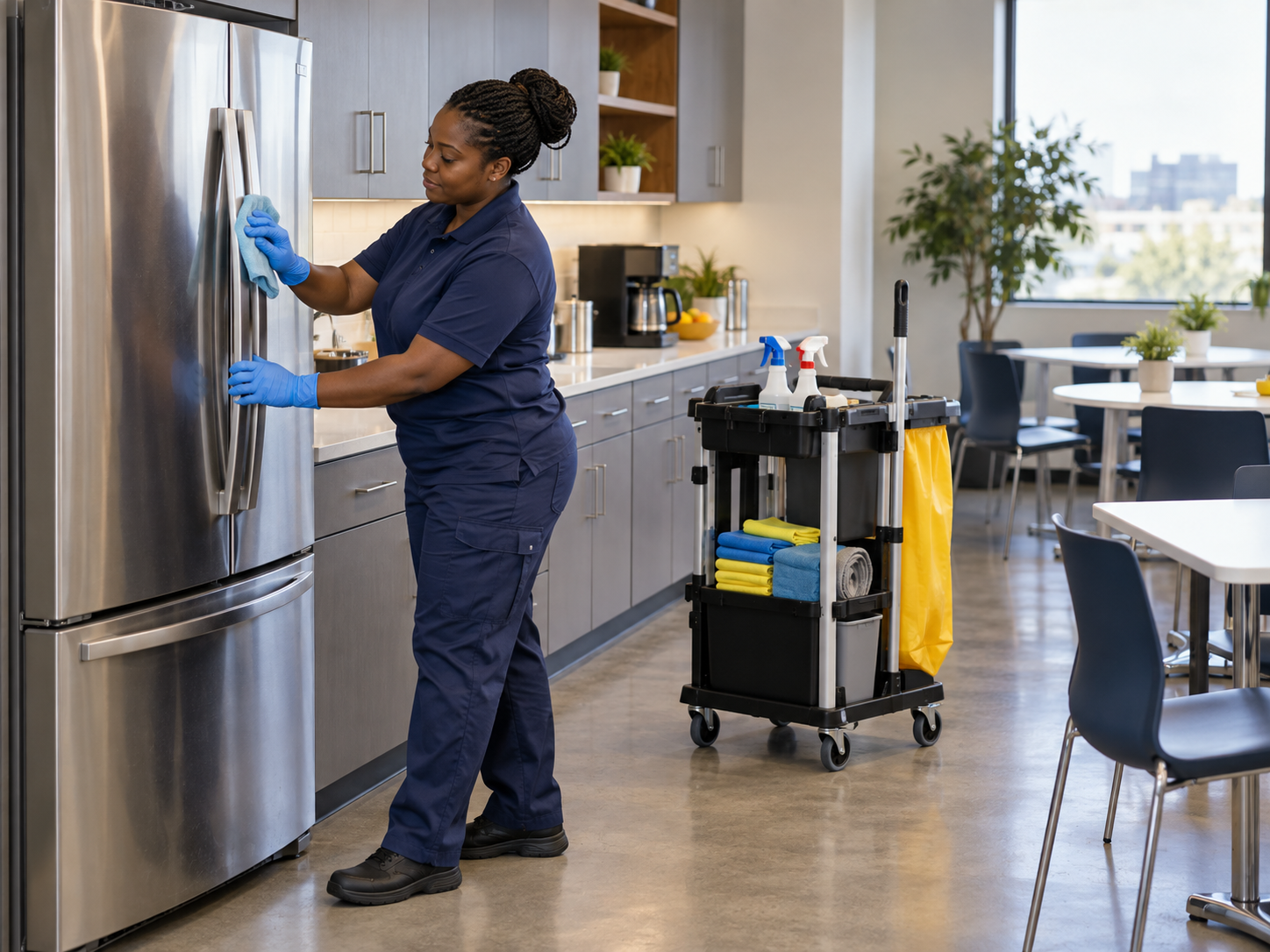
The break room is where birthdays are celebrated, leftovers are stored and coffee keeps the day moving. It is also where many people use the same handles, buttons and counters. The room may look orderly after the trash is removed while still needing attention on the surfaces people repeatedly touch.
A refrigerator handle and a shared countertop serve different purposes from an unused shelf or a decorative wall. The issue is not whether every part of the room looks equally polished. It is whether the spaces employees actually use receive appropriate care and whether obvious spills or waste remain between scheduled visits.
Food storage and shared facilities also make a break room different from an individual desk. Cleaning providers and office managers need a clear understanding of what is included, what belongs to employees and what should be reported rather than moved or discarded. That clarity supports a cleaner shared space without creating confusion over personal food or belongings.
Cleaning and disinfection have different roles
Cleaning removes soil from a surface. Disinfection is a separate process intended to inactivate microorganisms when the appropriate product and application are used. A service description should make clear what the provider is actually offering instead of using the two terms interchangeably.
An office manager does not need a promise that a building will become germ free. They need an accurate explanation of the work included and how it relates to the areas their staff use. A provider should also take account of the materials present, because office equipment, finished furniture and shared counters are not all suitable for the same treatment.
Workstations can also contain electronics, personal belongings and materials with particular care requirements. An agreed scope helps the cleaner maintain shared areas while respecting those boundaries. It gives the office manager a clearer basis for evaluating the service than a general promise that everything will be sanitized.
Supplies and shared spaces should remain usable
Restrooms and shared kitchens need more than a polished appearance. Employees need access to soap, usable dispensers and functioning fixtures. An empty dispenser or an unattended spill can interfere with everyday hygiene even when the room received attention during the previous visit.
This is where a clear service agreement is useful. Cleaning, restocking, reporting an empty supply cabinet and repairing a dispenser may be assigned to different people. Without clear responsibilities, a small problem can remain unresolved because everyone assumes someone else is handling it.
The CDC includes regular cleaning of frequently touched workplace surfaces and adequate hygiene supplies among its workplace recommendations. It also discusses cleaner air and other prevention practices. Those measures describe a broader workplace approach rather than a claim that surface cleaning alone will stop flu.
A consistent workplace supports the people using it
Visitors notice whether shared spaces are cared for, but illness should not be treated as proof that a business is disorganized. A capable team can experience seasonal absences even in a well maintained office. Claims about clients losing confidence should remain possibilities rather than predictions presented as facts.
For offices across Los Angeles County and San Bernardino County, the practical cleaning concern is continuity. Reception areas, break rooms, restrooms and workspaces still need dependable care when schedules change and staff are covering unfamiliar duties. An established scope helps keep that work from disappearing behind the pressure of the day.
Professional office cleaning has a useful place in that effort. It helps maintain shared surfaces and common areas while the business manages the wider demands of flu season. Clear responsibilities help the office maintain shared facilities while staff manage the pressures of the season.