Why Restaurant Cleaning Matters After the Last Guest Leaves
Published
Restaurant cleaning after closing gives suitable cleaning tasks an operating window with fewer guests and fewer conflicts with active food preparation. It supports the restaurant’s sanitation program, but it does not replace routine cleaning during service, food safety responsibilities or equipment maintenance.
Closing creates access, not unlimited time
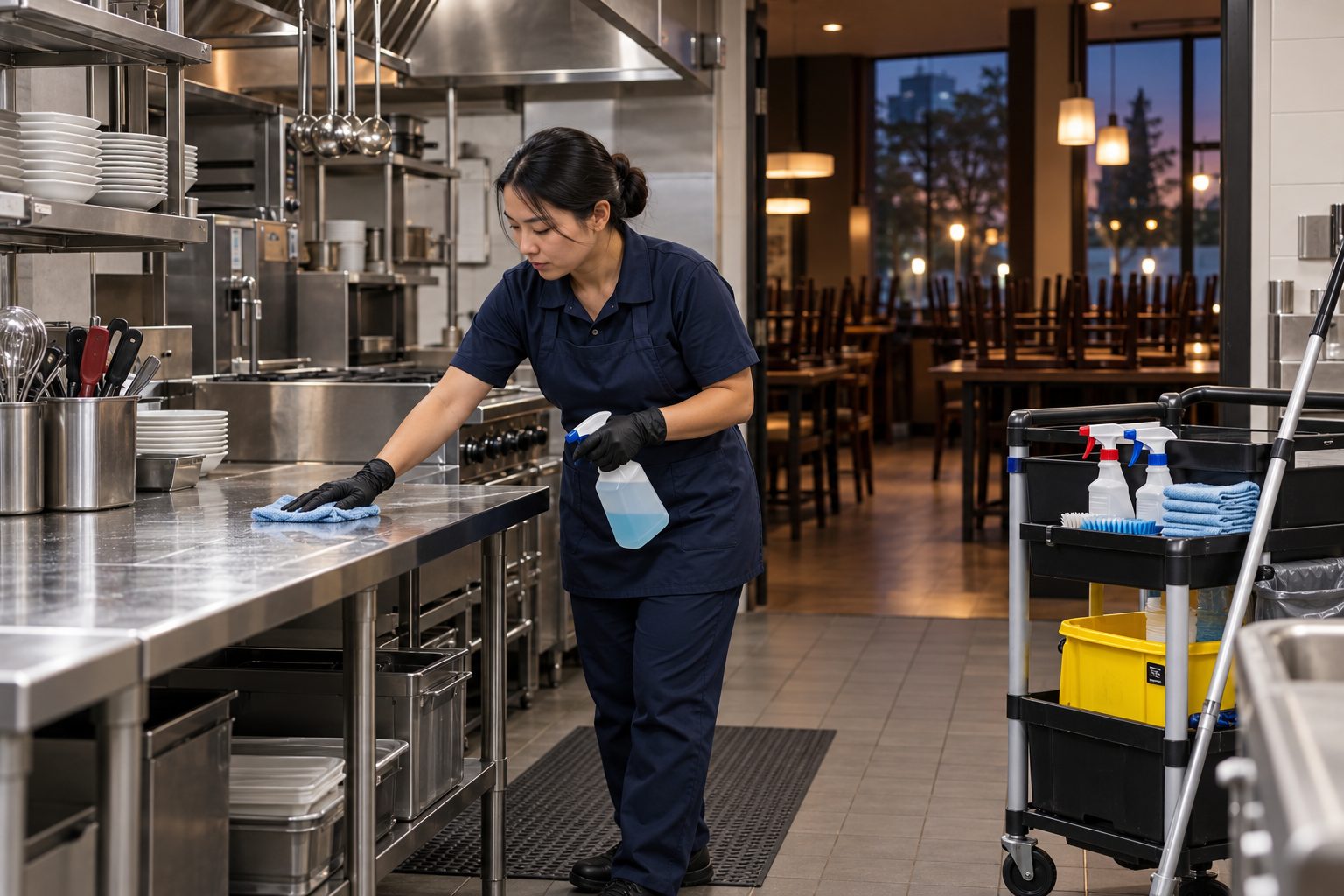
An empty dining room does not mean the entire restaurant is ready for cleaning. Kitchen staff may still be working, equipment may remain hot and food may still need proper storage. Discuss when each area can actually be released for the agreed work. The provider also needs to know the next opening time and any preparation that begins earlier. A realistic appointment accounts for cleaning, any required drying and the restaurant’s return to use. If the available window is too short for the full request, review the scope instead of assuming every task can be compressed into the same visit.
Routine upkeep and deeper work have different roles
Regular cleaning addresses the restaurant’s continuing use, while deeper scheduled work can target agreed buildup or areas that need more preparation and access. One does not erase the need for the other. A restaurant with an effective closing routine may still need periodic attention to suitable surfaces or accessible areas beyond that routine. Conversely, a deep cleaning appointment cannot maintain sanitation throughout every shift that follows. Management should identify what its staff handles during operations, what the professional appointment includes and which maintenance concerns belong to a specialist.
Define kitchen areas and equipment boundaries
A kitchen scope should identify the actual surfaces and accessible components to be cleaned. Floors, wall areas and equipment exteriors can have different requirements from food contact surfaces or appliance interiors. Equipment should not be assumed safe to move, disconnect or service simply because cleaning behind it was requested. Confirm who authorizes movement and which qualified person handles any necessary disconnection. Exhaust systems can require a specialist arrangement, so hood cleaning should never be inferred from a general kitchen service. These distinctions prevent a broad phrase such as deep cleaning from becoming an unsupported promise.
Prepare the restaurant for an authorized visit
The restaurant should identify the responsible contact, access arrangements and areas released for work. Staff need to understand what happens to food, utensils and movable items before cleaning begins. A provider should not be expected to decide independently whether an unknown item can be discarded or an appliance can be opened. If another contractor is working in the same area, coordinate the sequence and responsibilities. Clear preparation reduces interruptions and supports the agreed scope. It also helps distinguish incomplete access from a cleaning task that was actually authorized and ready to perform.
Treat inspections as a wider responsibility
Professional cleaning can help address relevant cleanliness concerns and prepare accessible areas for review. It cannot guarantee that a restaurant will pass a health inspection. Inspection outcomes can involve food handling, temperature control, equipment condition, facilities and other operational requirements beyond a cleaning appointment. Use the local inspection guidance to understand those responsibilities. If a concern involves a repair or an operating practice, refer it to the appropriate responsible person. A clean appearance is useful, but it should not be presented as proof that every requirement has been satisfied.
Return the space to service deliberately
Before reopening, the restaurant needs to follow the applicable requirements for its surfaces, equipment and food operations. Drying, safe access and the use of suitable products should be part of the agreed discussion. Management should review completed areas against the actual scope and identify any exclusions or unresolved conditions. A maintenance defect discovered during cleaning deserves a separate decision. Keep the distinction between a completed cleaning task and equipment readiness clear, especially where another professional must assess the appliance. The restaurant remains responsible for its operating decisions when food preparation resumes.
An example of a useful after closing plan
A restaurant may release the dining room first, then an accessible kitchen floor area after its staff finishes preparation and stores food appropriately. The cleaning appointment can address those agreed spaces while leaving a fixed appliance and its exhaust system outside the scope. Management can arrange specialist work separately if needed. This plan is useful because it identifies timing, access and responsibilities instead of promising an unlimited kitchen reset. Discuss the restaurant’s actual needs with Paradigm Janitorial and confirm the service scope and available appointment window before scheduling.
Resources
- Los Angeles County retail food inspection guide
Restaurant operators can use the local guide to understand inspection concerns and distinguish cleaning work from their wider operating responsibilities.
- Los Angeles County restaurant inspection information
Consult the local inspection information rather than relying on a cleaning provider’s promise of a particular inspection result.
- OSHA guidance for workers using cleaning chemicals
Use this worker safety resource when discussing chemical handling and suitable precautions, rather than assuming every cleaning product is harmless.