
When Diners Can See the Grease Before They See the Menu
Grease residue, sticky tables and neglected restrooms can shape how diners experience a restaurant even when the food and service are good. Professional cleaning can address accumulated soil in agreed areas and complement the staff's routine work during service.
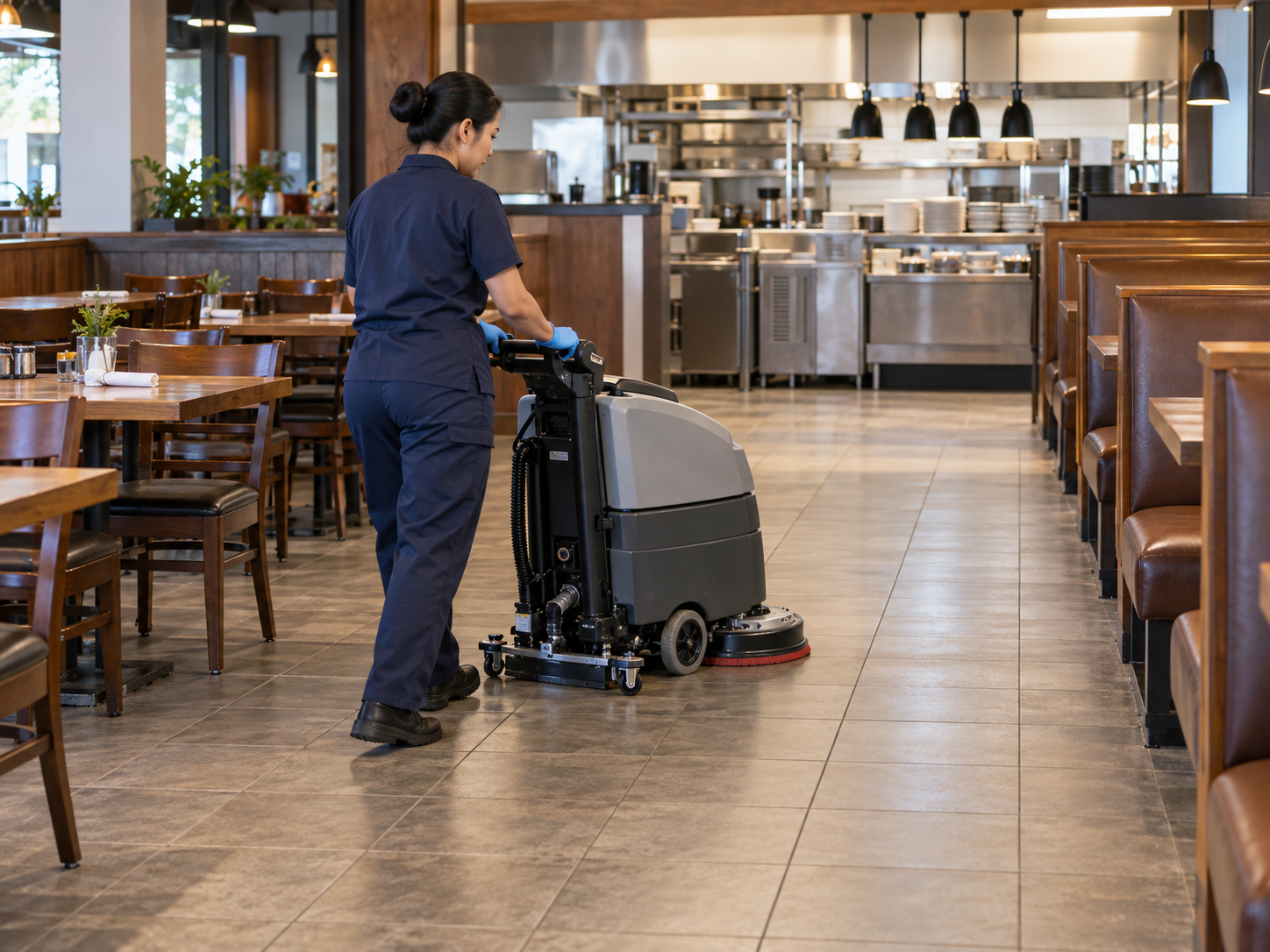
The first impression forms before the meal
Guests experience a restaurant through more than the plate in front of them. They use the entrance, walk across the dining room, touch the table and may visit the restroom before ordering. Those encounters help establish whether the space feels cared for.
A sticky tabletop or residue near a service station does not tell a guest how the entire kitchen operates. It can still interrupt the experience. A diner who has to ask for a table to be wiped again is thinking about the room's condition at a moment when the restaurant would rather have their attention on the menu.
The effect is best described as an influence on perception rather than a guaranteed lost customer. People make restaurant decisions for many reasons. Cleanliness is one of the conditions a business can address directly in the spaces guests actually use.
A busy dining room has more than one source of residue
Restaurant floors and surfaces can accumulate material from cooking, spills, beverages and ordinary foot traffic. Staff move between work areas, carrying traces of soil on footwear or equipment. Where cooking emissions reach nearby surfaces, they can also contribute to a film that is different from loose dust or crumbs.
Not every sticky patch is grease. Food or drink residue and remaining cleaning product can affect how a surface feels too. Assuming that every dull floor or tacky table has the same cause can lead to repeated attention that does not address the actual material present.
That distinction is useful when arranging professional cleaning. The condition of the surface, its material and how the area is used all matter. A worn finish and removable soil can look similar from a distance, but they may require different responses. An assessment helps distinguish the material that cleaning can address from an underlying finish or maintenance issue.
Daily presentation and accumulated buildup are different workloads
The visible work of restaurant service is constant. Tables need attention between guests, obvious spills need to be handled and dining areas need to remain usable. That work continues while staff are greeting customers, running food and preparing for the next seating.
Accumulated soil presents a different workload. Material around floor edges, in grout or on accessible surfaces may remain even when the room is swept and arranged for the next service. The fact that a room looks ready for guests does not establish that every area included in a deeper cleaning scope has been addressed.
The distinction does not imply that the closing crew is lazy or incapable. Routine service duties and periodic cleaning can have different access needs, time demands and responsibilities. A professional cleaning agreement can make that division clearer without replacing the restaurant's responsibility for conditions during operating hours.
Restrooms are part of the same visit
A diner experiences the restroom as part of the restaurant, even though it serves a different purpose from the dining room. Unpleasant odors, obvious waste or unusable dispensers can influence the impression they take back to their table.
Guests need usable fixtures, available hygiene supplies and a restroom that is maintained as part of the property. A facility can look orderly yet still disappoint a guest if a dispenser is empty or a fixture is out of use. Those conditions deserve attention alongside the surfaces included in a cleaning visit.
During a busy service, the restaurant still needs a clear responsibility for visible conditions and supplies. A cleaning visit after closing does not address a spill that happens halfway through dinner. Professional cleaning and the staff's attention during service work at different points in the day and should be coordinated accordingly.
The posted health grade has a separate purpose
Los Angeles County's grading system communicates findings from an official food facility inspection. The county describes an A grade as a score from 90 to 100, a B as 80 to 89 and a C as 70 to 79. The inspection addresses food handling practices and facility maintenance, rather than serving as a rating of dining room appearance alone.
A polished dining room does not guarantee a particular grade. Likewise, a guest noticing a sticky surface does not establish the score an inspector would assign. The inspection report and the applicable requirements provide the relevant context for an individual restaurant.
Cleaning can support the maintenance of a food facility, but it cannot replace food safety management or guarantee an inspection result. Owners operating in different jurisdictions should refer to the health department responsible for each location when reviewing inspection information and posting requirements.
A useful cleaning scope names the areas included
Restaurant cleaning is a broad description. Dining floors, accessible fixtures, restrooms and general kitchen surfaces do not automatically mean that every piece of equipment or every specialist task is included. A clear agreement should identify the areas covered and any access limitations.
Specialist equipment work, including exhaust system servicing, should be confirmed separately with the appropriate provider. Exhaust system cleaning, equipment repairs and other specialist work have their own scope and provider requirements. The same care applies to equipment movement and access around active food preparation areas.
That clarity protects the restaurant from expecting a task that has not been arranged. It also gives the restaurant a clear understanding of how the scheduled visit fits into the maintenance of the space.
A consistently cared for room supports the meal
Restaurants across Los Angeles County and San Bernardino County need their public areas to support the experience they are trying to provide. Professional cleaning can help address agreed floors, surfaces and shared facilities so accumulated soil does not become the most noticeable part of the room.
The purpose is not to create an exaggerated shine or make every older surface look new. It is to maintain a credible, cared for setting while recognizing the difference between removable buildup, normal wear and conditions that need another specialist.
Guests still come for the food, service and atmosphere. Keeping the dining room and restrooms appropriately maintained helps those parts of the visit remain the focus, while the restaurant continues managing its operational and food safety responsibilities.