
The Studio Floor Carries the Memory of Every Class
In most businesses, customers touch a counter or a door handle. In a martial arts or dance studio, customers put their bare feet, their hands, their faces, and sometimes their whole bodies directly on the floor, and they do it for an hour at a time, class after class, all evening long. A child in a beginner karate class in Los Angeles County falls, catches himself with both palms on the mat, and puts his face inches from a surface that held three earlier classes that day. A dancer in San Bernardino County goes to the floor in a routine, rises with damp palms, and never says a word about what the floor felt like. She does not have to. Her parent was watching from the doorway. That doorway is where a studio is truly judged. Parents stand there during their child first class, during trial weeks, and during the long months of tuition decisions that follow. They cannot judge your instruction the way an experienced student can. They judge what they can see and smell. The shine or dullness of the mats. The state of the lobby floor where street shoes and bare feet cross paths. The restroom their child uses between classes. The odor that builds in a warm room full of working bodies by the six o clock class. To a parent, those details are not decoration around the program. They are the safety record of the program, written in a language every parent reads fluently.
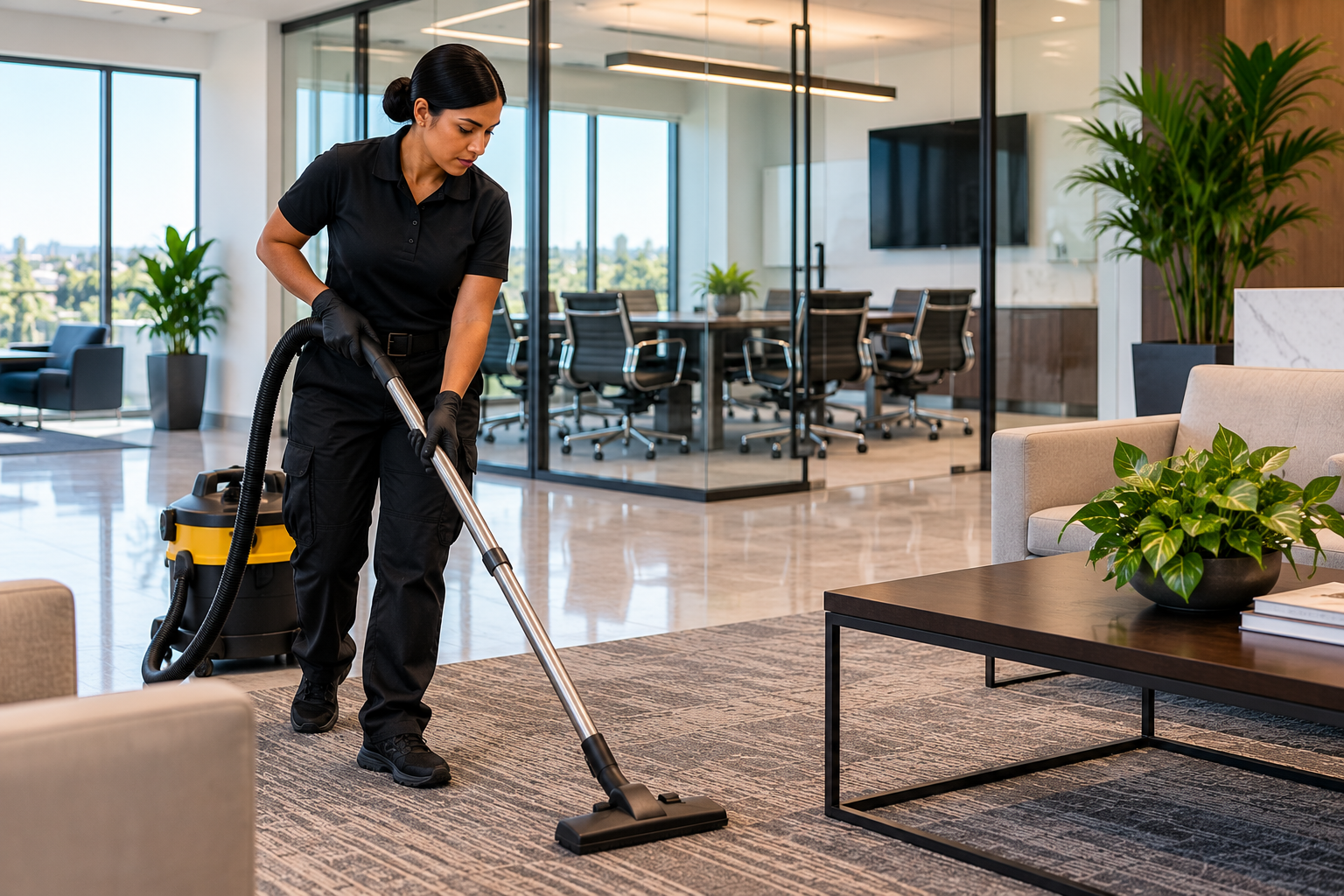
Bare Feet Change What a Floor Means
A studio floor is not like a gym floor or an office floor, because skin meets it directly and repeatedly. Martial arts students train barefoot by tradition. Dancers work barefoot, in socks, or in thin shoes that offer little between foot and floor. Young children sit on the mat to listen, sprawl on it to rest, and wipe their hands across it without a second thought. Sweat lands on that surface with every class, and in grappling and tumbling, skin itself presses and slides across it, picking up small scrapes and mat burns that leave the body open in ways parents only learn about afterward. Public health guidance on athletic settings treats this contact seriously for a reason. The North Carolina Division of Public Health, in its guidance on controlling community associated MRSA on athletic teams, singles out shared surfaces that come in contact with bare skin, including mats, as surfaces of real concern, and notes that equipment with damaged surfaces that cannot be adequately cleaned should be repaired or discarded. The concern is not theoretical. The same guidance exists because staph bacteria, including MRSA, spread in exactly the warm, close contact, shared surface conditions that a busy studio creates every evening. Martial arts communities know the companion risks by name. Ringworm, staph, and impetigo are the infections instructors warn about, and health guidance for wrestling and combat sports, including the Georgia High School Association zero infections material, describes mats and surfaces as an extremely important part of infection prevention and warns against letting people walk on mats in bare feet after coming from elsewhere, because what feet carry travels. Dance carries a version of the same story. Dance Magazine, reporting on the dangers of dancing barefoot, recounts a dancer whose small split in the skin of her foot, picked up in rehearsal, developed into a serious infection, and it advises dancers to examine the state of the floor before rehearsing and to insist on attention when a floor looks in need of it. A floor that an adult professional is taught to inspect is the same floor a seven year old trusts without thinking.
The Evening Builds on Itself, Class by Class
A studio day rarely starts dirty. It accumulates. The four o clock class for young children brings in school day germs, snack hands, and bathroom trips taken in bare feet down a hallway. The five o clock class adds older students and more sweat. By the teen and adult classes in the evening, the mats have absorbed hours of contact, the air in the room has thickened, and the lobby has taken the full traffic of parents, siblings, and street shoes arriving and leaving in waves. Nothing dramatic has happened. That is the problem. The decline is ordinary, which makes it easy for the people inside the studio to stop registering it. Instructors are the last people positioned to catch it. A good instructor is watching form, safety, and the child who is struggling at the back of the line. Between classes there are often only a few minutes, filled with a parent question, a belt order, a payment, and the next group already coming through the door. The mats, the barre, the waiting area chairs, and the restrooms live in those same few minutes, competing with everything else, and they lose that competition most nights in most studios. Owners then judge their own studio by the first class of the day, while parents judge it by the class their child actually attends, deep into the evening build up.
The Quiet Effect of Studio Cleanliness on Trust
Studios tend to imagine that a cleanliness problem would announce itself through complaints. With parents, it almost never works that way. A mother who notices her child feet are black after class, or who catches a sour smell from the mat during a floor exercise, rarely confronts the instructor her child adores. A father who watches students walk from the restroom back onto the mat in bare feet files the image away silently. These are not confrontational moments. They are renewal moments, arriving weeks later, disguised as a schedule conflict, a budget decision, or a child who supposedly lost interest. Trial classes carry the highest stakes of all. A family trying out a studio has no loyalty yet and no relationship to balance against a bad impression. They have a child who is nervous, a monthly tuition decision to make, and a choice of other studios across Los Angeles County and San Bernardino County, including dance academies and martial arts schools within a short drive of each other in most communities. The instruction may be excellent and the instructor kind, and the family still leaves remembering the lobby restroom and the look of the mats under the bright lights, because those are the parts they felt qualified to judge. Some studios may never learn why a family chooses not to enroll, and a lost trial family often tells other parents at school pickup a version of the story that the studio will never hear. There is a retention cost inside the room as well. Adult students, who pay their own tuition and have the most direct contact with the mats, are the quickest to quietly drift away when a studio starts to feel unclean, and the least likely to explain themselves. One skin infection moving through an adult class can empty it for a season, and the students who leave over it describe the studio to training partners elsewhere in terms no advertising can outrun.
Trust Is the Curriculum Parents Are Buying
Parents enroll a child in martial arts or dance for discipline, confidence, coordination, and joy. Underneath every one of those hopes sits a simpler expectation, that the studio is a carefully kept place where their child body is safe. The condition of the mats and floors is the most visible proof of that care a parent will ever get. It is checked, consciously or not, at every drop off and every pickup, by the people whose renewal decisions keep the studio open. When a studio grows busy enough that its mats, floors, lobby, and restrooms need more attention than instructors can give them in the few minutes between classes, many owners end up talking with Paradigm Janitorial about keeping commercial training spaces at the standard parents expect when their children train barefoot. Your instructors should be spending those minutes on the students in front of them. The floor those students trust with their bare feet should never become the reason a parent decides not to come back.
Sources and references
https://epi.dph.ncdhhs.gov/cd/mrsa_ca/athletics.html