
The Urgent Care Waiting Room on a Saturday Morning
Saturday morning arrives early at an urgent care center in Los Angeles County. A father carries in a toddler who coughed through the night. A teenager holds an ice pack to an ankle hurt at practice. An older man sits with his wife, both watching the door and hoping their name will be called soon. None of these people planned to be here. They are tired and worried, and they are paying close attention to everything around them, even if they do not realize it yet. The waiting room becomes the first part of the visit, long before an exam room or a diagnosis, and long before anyone has a reason to trust the care they are about to receive.
Saturday starts before the doors feel ready
Weekends change the math for urgent care. Many doctor offices are closed, youth sports are in full swing, and families who tried to wait out a fever on Friday night decide by Saturday that they need to be seen. A center in San Bernardino County feels the same surge, with patients driving in because this is the one door that is open. The surge arrives in clusters. Three families walk in after a soccer game. A grandmother brings two grandchildren at once. The room goes from calm to crowded in twenty minutes, with chairs pulled closer, hands on armrests, bags on seats, and constant trips to the check in counter. Staff attention belongs to patients, paperwork, and phone calls. The room still needs constant attention, but the people closest to it have the least time to tend to it. The busier the center gets, the more the room is used, and the less time anyone has for the room itself.
The chairs hold more than people waiting
By midmorning, a row of chairs tells a story. Armrests carry the marks of dozens of hands. Seat backs show where jackets and backpacks rested. A tissue sits tucked beside a cushion, a cup waits under a seat, and crumbs trace where a restless child sat. Patients notice because waiting gives them nothing to do but look around. A parent who cannot control a fever can control whether she moves her child to a different seat.
Chairs are also rarely empty for long. One family leaves for an exam room and another takes those same seats within minutes. There is no pause when the room resets itself. That shared use is unavoidable in health care, which is why families read so much into how the space feels. When a room looks worn down by the morning, patients begin to wonder what else is worn down behind the scenes, in places they will never see.
The check in counter becomes a shared surface
The check in counter may be the most touched place in the building. Insurance cards slide across it. Pens move from hand to hand. Clipboards lean against it while parents balance a sick child on one hip and try to write with the other. Phones are set down and picked up again while someone searches for a member number. None of this is anyone doing something wrong. It is normal life in a stressful moment. The problem is volume. By ten o clock, that counter has hosted hundreds of small contacts, and fingerprints and smudges are visible to the next person who steps up. A patient decides in those first minutes whether the center feels organized. If the surface in front of her looks neglected, that feeling travels with her into the exam room. People cannot watch how rooms are prepared between patients, so they judge hidden care by the visible care in front of them.
The children's corner carries a different kind of worry
Many centers set aside a corner for children, with a small table, books, and toys meant to make a hard morning easier. Parents are grateful for the intention, and they are also watching that corner most closely. A toddler puts a toy in his mouth, sets it down, and reaches for another. A preschooler coughs into her hands and turns the pages of a picture book. Siblings share crayons and chairs. By midmorning, that corner has been loved hard by many little hands, and it shows.
For a parent holding a child who is already sick, the worry is not abstract. She came because her child is unwell, and she does not want to wonder whether the waiting made things worse. Some parents move their children away from the corner altogether, choosing a restless lap over a play area they do not trust. When that happens, a kind feature becomes evidence in a judgment the parent is already making about the whole visit.
The restroom adds its own verdict
During a long wait, most people need the restroom, and that short trip often settles what they were still deciding. A waiting room can be forgiven a few crumbs. A restroom is held to a different standard in a building devoted to health. On a Saturday it cycles through patient after patient. The floor takes on water and paper, the trash fills faster than expected, and the sink shows every splash. A parent helping a sick child in that small space is not thinking about staffing. She is thinking that a health care building should feel healthy in the rooms patients use. One person returns and quietly warns a spouse about what is in there, and that whisper carries more weight than any sign on the wall.
The reputation that leaves with every family
People rarely say they judged a visit by a waiting room. They say it later. They tell a neighbor which urgent care felt off. They leave a review that mentions the front of the house more than the care. They choose a different center next time because the other place just felt better. The clinicians may be skilled and the diagnosis may be right, yet the family leaves with a memory shaped by sticky armrests, a full trash can, and a restroom they wished they had not needed.
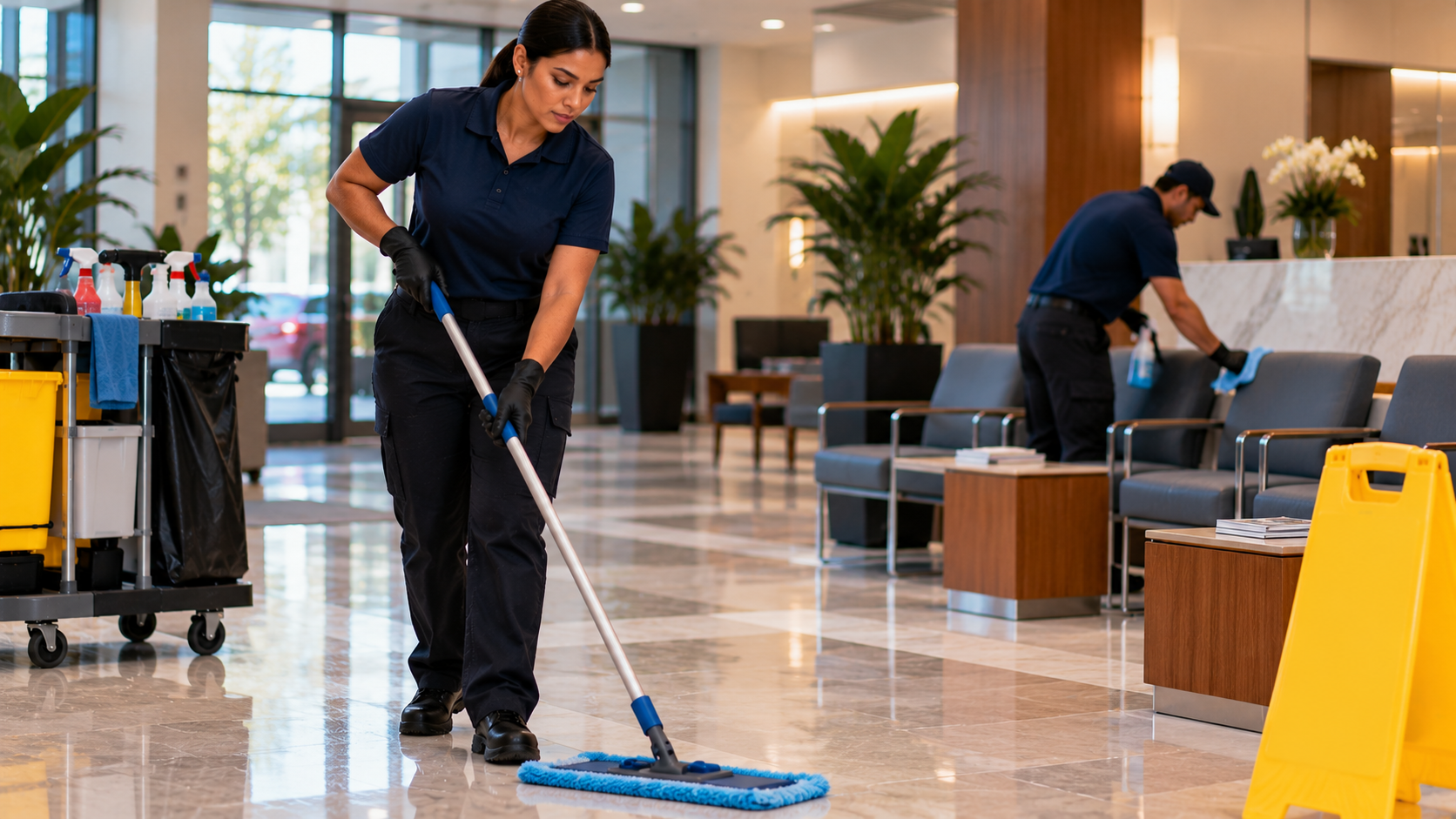
By early afternoon the rush thins, but every family took an impression home. Keeping that room to the standard families expect is its own demanding job, separate from checking patients in and separate from treating them, and it grows harder exactly when the center is doing its most important work. Centers that recognize that gap, and treat the room as a responsibility deserving dedicated professional attention, are the ones families describe as the place that felt right from the moment they walked in.
Sources: https://www.cdc.gov/infection-control/hcp/environmental-control/index.html, https://www.cdc.gov/healthcare-associated-infections/about/index.html, https://www.epa.gov/indoor-air-quality-iaq
Paradigm Janitorial | Commercial & Residential Cleaning | paradigmjanitorial.net