
What a Day Porter Does and When Your Building Needs One
Published , updated
A day porter maintains agreed shared areas while a building is occupied, responding to ordinary cleaning needs between scheduled janitorial visits. Your building may benefit from porter coverage when restroom supplies, entrances, waste stations or shared spaces repeatedly need attention before the next cleaning crew arrives.
The work follows the building’s daily use
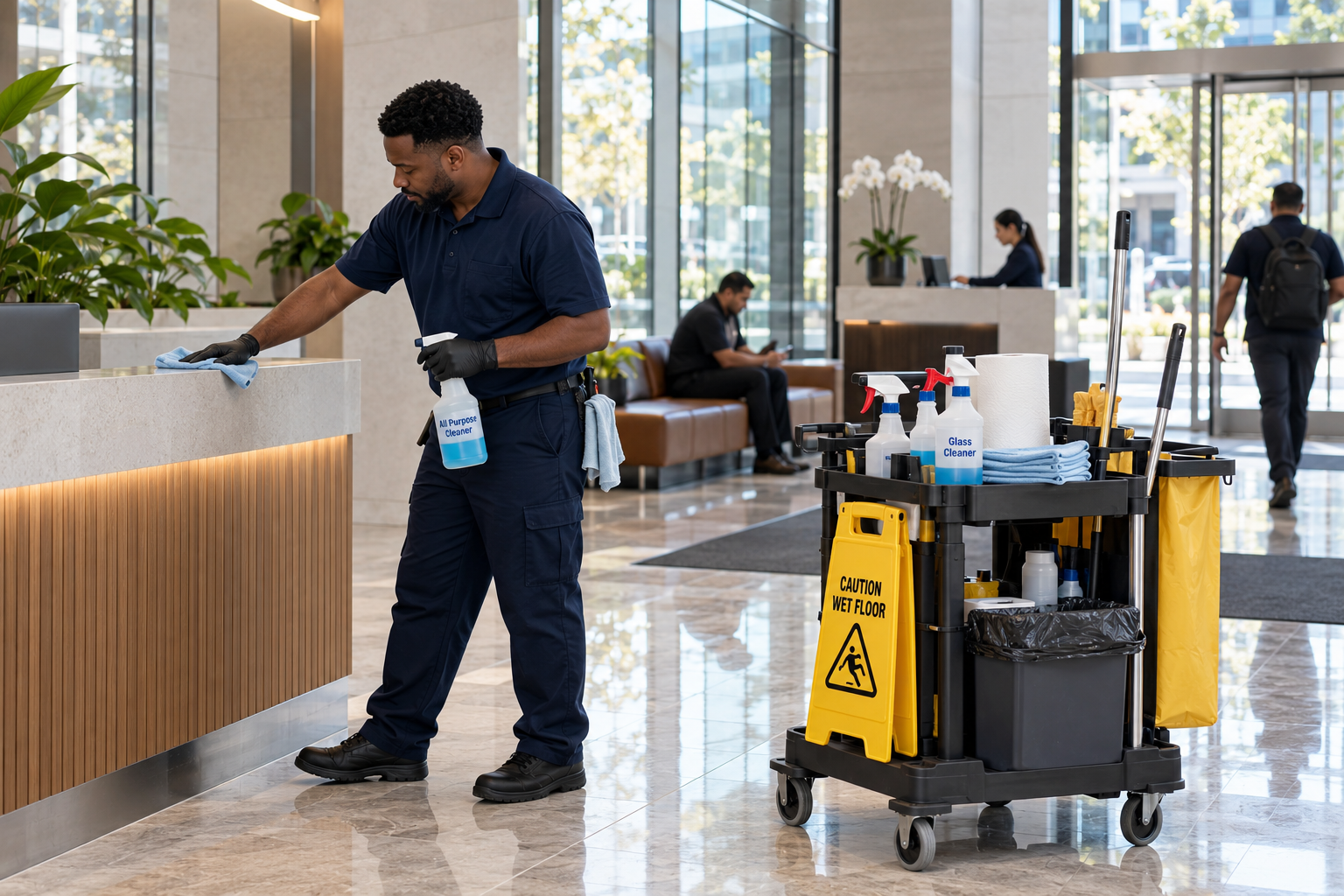
A lobby can be clean at opening and visibly affected by deliveries and foot traffic before lunch. A busy restroom can run short of supplies while the rest of the property still looks presentable. Porter service addresses this timing problem through scheduled attention to the spaces people continue to use. The role can include litter collection, suitable spot cleaning, restroom supply checks and common area upkeep, depending on the agreement. It should identify the areas covered and how ordinary requests reach the assigned worker.
Porter coverage and scheduled janitorial visits serve different needs
A janitorial visit usually follows an agreed cleaning scope within a scheduled service window. A porter works during an occupied period, when the same entrance or restroom may need attention more than once. These services can support each other, but neither title establishes the entire scope. For example, a daytime porter might address a small lobby spill while a later crew performs the broader floor cleaning. Carpet extraction, finish restoration and other specialized work require their own arrangements. A porter should not be assumed to handle repairs, security duties or every emergency that occurs in the building.
Identify a recurring need before adding coverage
Look for a pattern in actual conditions rather than deciding from building size alone. A compact retail property can have intense traffic, while a large office can have quiet periods and limited shared facilities. Record which spaces need attention, when the need occurs and whether the next scheduled visit is too late. If the problem is consistently concentrated around one busy period, targeted coverage may be appropriate. If conditions change throughout the entire operating day, broader coverage may deserve consideration. Management should also check whether missing supplies or damaged fixtures are causing the apparent cleaning problem.
Write a scope that people can understand
An effective scope identifies spaces, duties, coverage periods, supply responsibilities and excluded work. Restroom restocking should specify the agreed products and storage access rather than assume every dispenser uses the same refill. Waste handling should identify the authorized collection and disposal areas. Management should provide a contact for maintenance concerns and requests beyond the assignment. Occupants should know that a person working nearby is not automatically authorized to move their belongings or enter a restricted room. Clear boundaries protect service consistency and make performance easier to evaluate.
Plan for occupied spaces and safe access
Cleaning during operating hours needs attention to pedestrians, meetings and the use of shared facilities. A worker may need to control access to a temporarily wet area and communicate when a restroom is unavailable. Cleaning products must be suitable for the surface and used according to relevant instructions. More chemical use does not automatically create a better result. A damaged fixture, unusual substance or significant water event may require reporting and a qualified response beyond ordinary porter tasks. Confirm these limits before treating the role as a general emergency service.
Review the arrangement as the property changes
A useful review compares the agreed duties with observed conditions during the covered hours. Check whether supplies remain available, shared waste areas receive appropriate attention and recurring issues are reported to the responsible person. One clean photograph cannot establish the result across an entire shift. Changes in occupancy, events or new amenities may justify revisiting the scope. A building that adds a shared kitchen, for example, has different needs from the same building before that amenity opened. Discuss those changes with the provider and confirm availability rather than quietly expanding the assignment through informal requests.
A practical building example
Consider an office property whose evening cleaning is satisfactory but whose shared restrooms regularly need replenishment during the afternoon. Management also notices litter near the delivery entrance around the same period. Porter coverage during the active window may address those recurring needs while the evening crew continues the broader cleaning program. If the same building later adds weekend events, weekend coverage needs a separate discussion. The decision follows actual building use, authorized duties and available service, rather than an assumption that every office needs a full day porter.
Resources
- CDC guidance for cleaning a facility
Consult this guidance for the distinction between cleaning and disinfection and for considering a facility’s surfaces and use.
- OSHA guidance for workers using cleaning chemicals
Use this worker safety resource when discussing chemical handling and suitable precautions, rather than assuming every cleaning product is harmless.
- OSHA requirements for walking surfaces
This reference addresses workplace walking surface conditions. It is relevant when cleaning affects access or creates a temporarily restricted area.