By Monday Morning, Your Place of Worship Is Still Carrying the Weekend
Weekend services and gatherings can leave a place of worship needing more than straightened chairs before weekday programs begin. Restrooms, shared halls, entrances, and food service areas receive different kinds of use, so a building that looks ready in the sanctuary may still need attention elsewhere. Cleaning planned around the full building calendar helps those spaces welcome the next group without carrying the previous event into it.
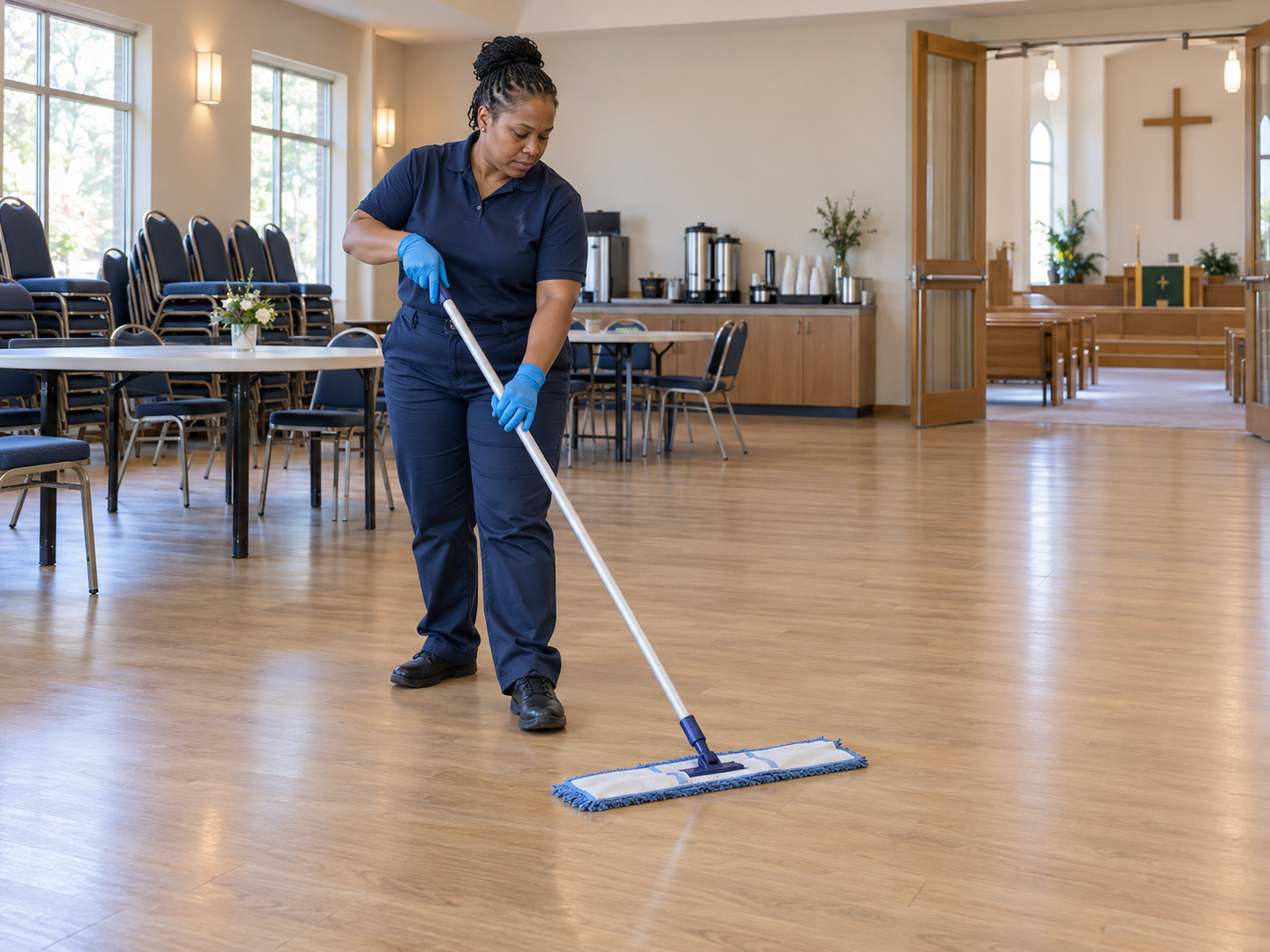
The challenge is easy to underestimate because the congregation rarely uses every room at once. A hall may host a reception while a classroom holds a children's program and another room welcomes a small discussion group. When everyone leaves, each room tells a different story. Bringing them back to a consistent condition takes more than treating the building as one large open space.
The busiest room may be outside the sanctuary
The room that draws the most attention during a service is not always the room that needs the most attention afterward. A sanctuary may see a concentrated period of seated use, while restrooms and entrances serve people throughout the day. A fellowship hall can move from refreshments to a meal to another gathering with little time between them.
That difference matters when leadership reviews the building on Monday. Straight rows of chairs do not reveal the condition of a classroom floor, the underside of a shared table, or the restroom used by the final group of the evening. A walkthrough focused only on the most visible room can miss the spaces that weekday visitors actually use.
A more complete picture comes from the activities each room hosted. Food, crafts, heavy foot traffic, and repeated restroom use create different demands. The cleaning needs belong to those activities, rather than simply to the number of rooms on a floor plan.
A tidy room and a cleaned room serve different purposes
Volunteers who stack chairs, put away decorations, and collect loose items make the building usable again. That work is valuable. It also does not establish that floors, shared surfaces, and restroom fixtures have received the attention they need.
Confusion develops when everyone uses the word ready to mean something different. An event organizer may mean the furniture is back in place. An administrator may mean the room is available to book. The next visitor may expect the tables, floor, and nearby restroom to be clean as well.
Those expectations can coexist when the building has clear responsibility for each part of the transition. The purpose is not to criticize volunteers. It is to keep a generous contribution from quietly becoming responsibility for every condition left behind by a busy calendar.
Shared meals extend beyond the kitchen
A community meal affects more than counters and dishes. People carry drinks through doorways, move chairs across floors, and use nearby restrooms before leaving. Waste may collect in several rooms rather than at one disposal point.
The next group inherits those conditions even if it never enters the kitchen. A meeting in the hall can be affected by sticky flooring from an earlier reception. A weekday class may pass the waste left near an entrance after a large gathering. Looking at the path people take through the building makes these connections easier to recognize.
Kitchen responsibilities also need to be clear. General janitorial cleaning, food preparation duties, and specialized equipment service are separate areas of work. A building should not assume one arrangement includes all three without discussing the actual spaces and equipment involved.
Meaningful furnishings deserve specific boundaries
Places of worship often contain materials and objects that deserve special consideration. Finished wood seating, upholstery, decorative metalwork, historic flooring, and donated furnishings can sit close to ordinary surfaces used every day. Sacred objects may have handling requirements that only authorized people should manage.
A cleaning arrangement should recognize those differences before work begins. An item that looks like a decorative object to an unfamiliar visitor may have religious importance or sentimental value. Staff should be able to identify areas that require permission, specialist care, or no handling at all.
Historic interiors deserve particular care. National Park Service preservation guidance discusses retaining significant interior materials and avoiding cleaning that changes their appearance. The useful principle for a congregation is straightforward, preserving a building's character is part of caring for it, rather than an obstacle to making it presentable.
Weekday programs change the cleaning picture
A place of worship may also function as a meeting venue, community center, or learning space. Rooms can be occupied again long before the next main service. Cleaning needs to fit that actual pattern of use rather than an assumption that the building will remain empty all week.
Access matters as much as timing. A quiet counseling appointment, a rehearsal, and a group meal need different surroundings. Work should be coordinated so equipment and activity do not interfere with the people already using the building.
Children's programs may also involve responsibilities beyond general community room cleaning. Leadership should identify those spaces and any applicable program requirements instead of assuming the same arrangement covers every room. CDC guidance distinguishes ordinary community facilities from settings that need more specific cleaning practices.
A consistent building supports the work happening inside
A well cared for worship building does not need to look like a hotel lobby. It needs to support the community using it. That means shared spaces are available in an appropriate condition, meaningful furnishings are respected, and responsibility does not disappear when one event ends and another begins.
For congregations in Los Angeles County and San Bernardino County, Paradigm Janitorial can discuss cleaning needs around the building's rooms, activities, and access requirements. The conversation should start with how the property is used, so the cleaning arrangement fits the life already taking place inside it.
Resources
CDC, When and How to Clean and Disinfect a Facility
General guidance for community facilities, with distinctions for settings that require more specific practices.
National Park Service, Rehabilitating Interiors in Historic Buildings
Background on preserving significant interior features and materials, relevant when a worship building contains historic finishes.