
Understanding Slippery Restaurant Floors That Appear Dry
A restaurant kitchen floor can feel slippery without visible water because grease, fine food particles or cleaning residue may remain on the surface. The flooring and footwear also matter, so a dry appearance does not establish that the walking surface is safe. Restrict access to the affected area and have the contamination, cleaning process and floor condition assessed before treating the problem as ordinary mopping.
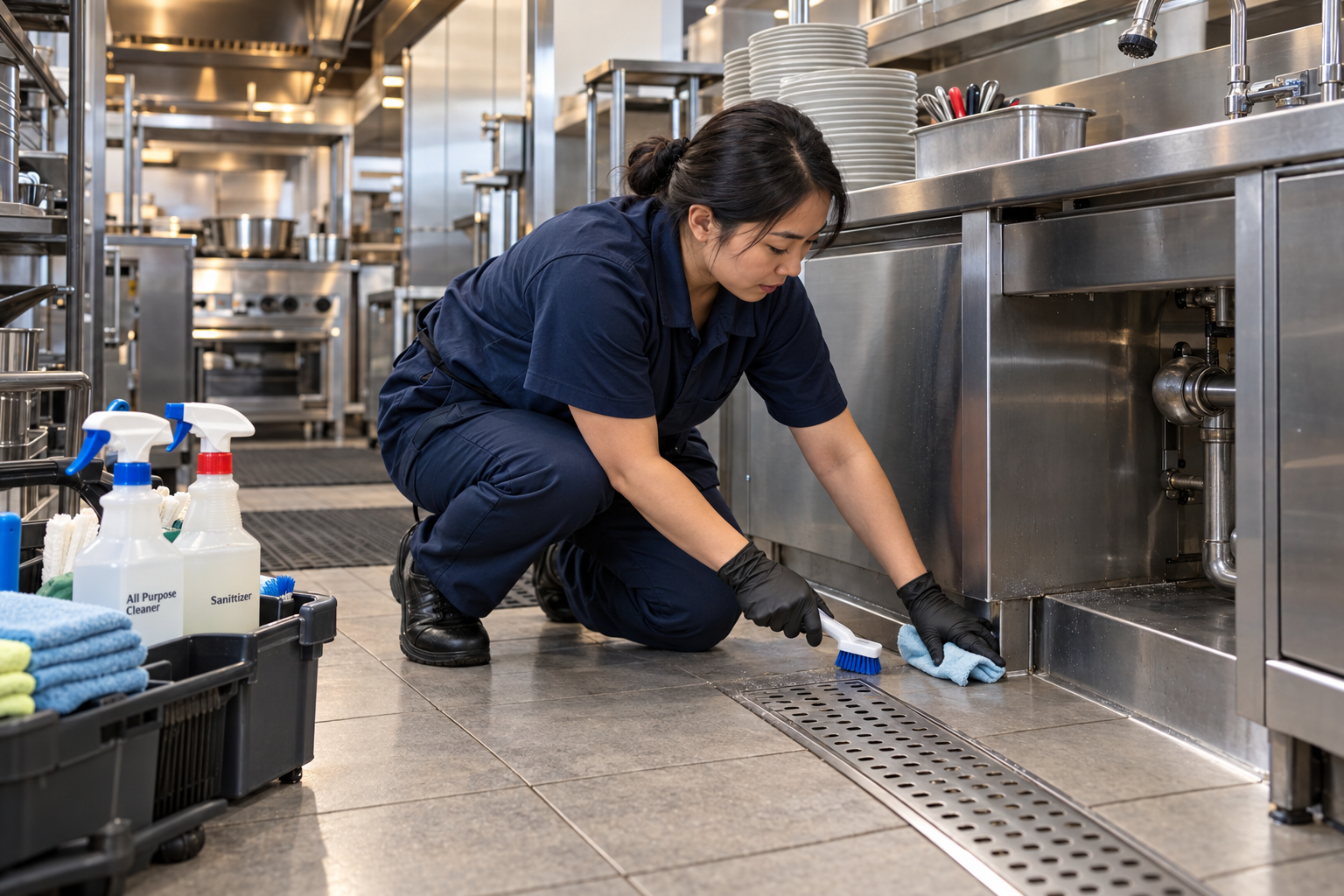
Dry appearance and traction are different observations
The Health and Safety Executive identifies dry contamination, including flour, as a kitchen slip hazard. It also explains that cleaning must remove the contamination that affects grip. A floor can look presentable while an inconspicuous layer remains where staff stand, turn or carry items.
Describe the problem precisely to the person assessing it. Does it occur beside the fryer, near the dishwashing area or across a route between stations? Is it noticed before service, after cleaning or during a busy period? Keep that information with the cleaning record. Do not ask staff to repeatedly walk across a questionable patch to demonstrate the problem.
Find out what is reaching the floor
Ask the kitchen team which activities take place near the affected area and whether the problem follows a particular task. Record spills, tracked material and any change in cleaning supplies or equipment. A recurring location can point the assessment toward a source that routine closing checks are not addressing.
The purpose is to gather evidence, not to blame a worker or assume that the floor is worn out. A photograph of a shiny surface cannot establish traction. Explain where the concern occurs and what has already been tried so the cleaner, manager or flooring specialist can review the same facts.
Review the process, not just the cleaning frequency
The HSE emphasizes choosing cleaning methods that suit the floor and contamination and following the product manufacturer’s instructions. More frequent mopping will not necessarily resolve a mismatch between the cleaner, method and surface. Ask whether the current process actually removes the material or leaves something behind.
Have the provider review the product instructions, equipment condition and the way the area is left after cleaning. Discuss whether access needs to be restricted while the work is underway and while the floor dries. Changes should be deliberate and documented. Do not improvise a stronger chemical mixture because a surface feels slippery.
Separate a cleaning issue from a flooring issue
Cleaning may restore the condition of a contaminated surface, but it cannot make every unsuitable or damaged floor appropriate for kitchen use. If the concern remains after a suitable cleaning process, ask a qualified flooring professional to evaluate the surface. Footwear and the working conditions should be considered alongside the floor.
A useful handover identifies what the cleaner observed, what method was used and what remains unresolved. Avoid accepting an unsupported claim that a coating must be stripped or that the entire floor needs replacement. Those are different jobs requiring their own assessment and authorization.
Build the response into kitchen operations
Keep the affected area out of routine traffic while the manager arranges an assessment. Plan work around kitchen operations so equipment, food and staff are protected and the space can be checked before it returns to use. A cleaning contractor should coordinate with the kitchen manager rather than interrupt active cooking or move connected appliances without an agreed procedure.
Afterward, record the completed work and any conditions that require further action. Give closing staff a clear reporting route if the problem returns. The goal is a reliable response to a specific recurring condition, not a promise that a single deep clean makes every kitchen floor safe forever. A well defined restaurant cleaning scope can address ordinary buildup, while flooring problems and unresolved contamination sources need the appropriate specialist.
Resources
- HSE, preventing kitchen slips and trips
Technical guidance on contamination and kitchen floor cleaning. This is UK guidance, not California law.
- OSHA, restaurant cleanup safety
United States workplace guidance on cleanup hazards and safer working conditions.