Medical Office Deep Cleaning Schedules
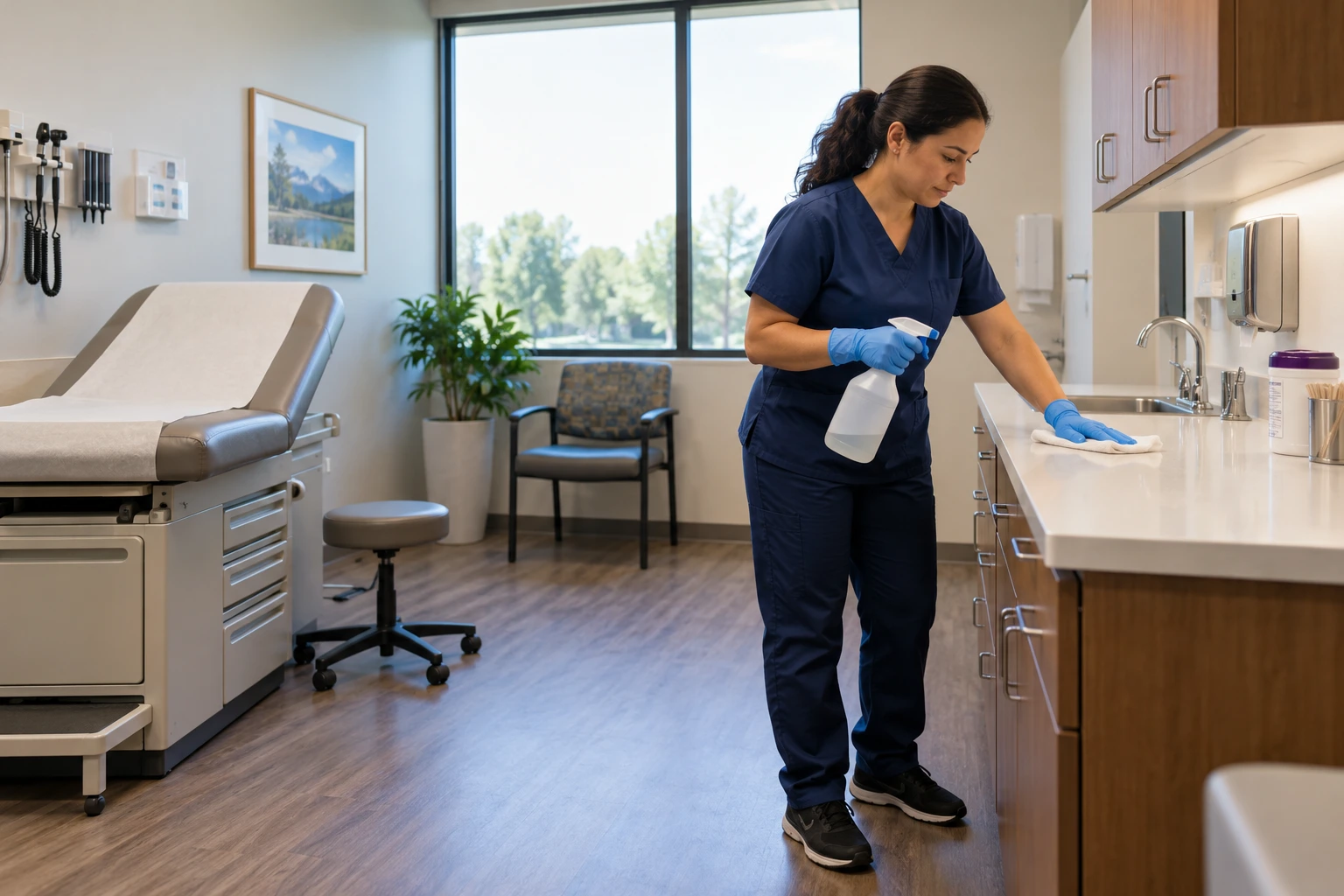
A waiting room and treatment room may need different routines
An administrative office, shared waiting area, restroom and clinical treatment room have different exposure patterns. A facility's cleaning plan should recognize how patients and staff use each space, whether vulnerable populations are present and whether equipment is shared. High-touch items such as door handles, switches and frequently handled counters warrant particular attention within the facility's procedures. A blanket instruction to deep clean the entire building on one interval overlooks these differences.
Risk assessment drives frequency
The CDC describes three main considerations for environmental cleaning: how likely a surface is to become contaminated, how vulnerable the patients are and how likely people are to contact the surface. Those factors together help determine cleaning method and frequency. A facility should document the routine schedule, the responsible people and the procedures for additional cleaning when spills or other events occur. The plan is part of broader facility management and should not be delegated to a vague marketing promise.
Ordinary cleaning and disinfection have different purposes
Removing visible soil is not automatically equivalent to disinfecting a surface. Appropriate products, label instructions, contact times and compatibility with equipment matter. The facility's infection prevention personnel or responsible clinical leadership should determine the procedures required for clinical areas. A commercial cleaning provider should follow the agreed authorized scope without representing ordinary janitorial work as sterilization or as a substitute for clinical infection prevention programs.
Deep cleaning needs an operational plan
A more detailed service may address lower-touch areas, buildup, floors or other components that are not the focus of routine between-use cleaning. Scheduling should account for patient appointments, privacy, clinical supplies, access restrictions and product suitability. Cleaning staff should understand which areas they are permitted to enter and which equipment must remain the responsibility of clinical personnel. Documentation and clear handoffs can help both teams avoid gaps.
Establish a facility-specific schedule
Paradigm Janitorial offers cleaning for commercial facilities and can discuss its existing Medical and Dental Office Cleaning service. Facility managers should bring their current environmental cleaning policies and describe the rooms, hours and scope needing support. The existing medical office service page is the appropriate way to request a property-specific discussion. No routine cleaning service can promise to prevent every infection or satisfy every clinical rule without further review.